Hard-Rock Life

by Jack Taylor

A guide to rock climbing in and around Bozeman.

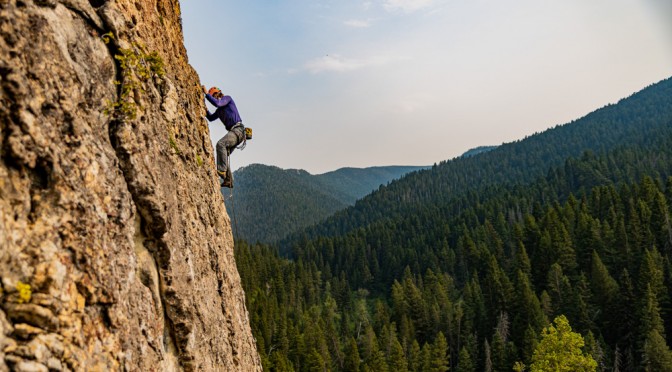
Rock climbing is a hallmark of outdoor recreation. Seriously—carabiners and ropes have essentially become the universal signals of people who like to spend time outside. Oh, you’ve got a spring-loaded metal device affixed to your water bottle? Where did you go camping last weekend?

Joking aside, climbing is fun for pretty much anyone. And for some folks, it becomes an all-absorbing obsession. Perhaps there’s a primal urge hard-coded in our DNA inherited from tree-swinging apes. We have an impulse to climb. It feels good.

And fortunately, there are plenty of spots to rock climb around Bozeman. For beginners and experts alike, our mountains and valleys are dotted with cliffs of all different rock types—granite, limestone, and sandstone alike. So whether you’re an expert or neophyte, here’s what you need to know about climbing in southwest Montana.

Where to Go
Beginner
For easy sport climbing, Bear Canyon is the go-to. There are tons of bolted routes in the 5.6-5.10 range. It’s also one of the closest climbing areas to downtown Bozeman—just a 20-minute drive and 10-minute approach.

Allenspur is another great beginner-friendly zone (albeit a bit farther from town), and has some more difficult climbs to be found—it’s a good spot if you’re looking to appease climbers with a variety of skill levels.

Intermediate
When it’s time to notch it up, Practice Rock offers a selection of climbs from 5.6-5.12. There aren’t any sport climbs per se, but it’s possible to hike to the top and set up a top-rope on a bolted anchor for nearly every climb.

Another popular area is Bozeman Pass, with a variety of sport-climbing crags offering routes across a broad range of difficulty. The Training Wall is known for having some local test-pieces.

Advanced
Gallatin Canyon is the beating heart of Bozeman-area rock climbing. With hundreds of routes ranging from moderate multipitch romps to nails-hard crack climbs, there’s enough to keep a zealous climber entertained for years on end.

Wolverine Bowl has the best limestone sport climbing in the area. It’s bullet-hard, very sharp, and dotted with long pitches in the 5.11-5.12 range. Not to mention, its setting in the Bridgers is quite serene.

Far-Flung
Looking for a weekend road-trip outside the immediate area? Natural Bridge has some of the best sport climbing in the state. Pipestone has a plethora of boulders and cracks, with nice camping. The Humbug Spires offer tantalizing faces and cracks, and are steeped in climbing history.

Tying In
Around Bozeman, you’ll find lots of places to climb—and fortunately, not too many other people out there. Still, there are some important pieces of etiquette to keep in mind.

First and foremost, give people space. With plenty of room to spread out, there’s no need to be crowding another party on a route. Wait patiently for a pitch to open. There’s surely something else nearby.

On the other hand, don’t be a hoarder. Spending two hours working the most popular route at the crag on a busy weekend is pretty inconsiderate.

Music is a polarizing topic. At the end of the day, though, it’s presumptuous to think that other people are okay with you blasting tunes out there. Some of us are trying to enjoy nature for all that it is—sound (or lack thereof) included.

And then there are dogs. Lots of them around here, in fact. If you bring your dog climbing, it is absolutely imperative that you consider the impact on other people. Well-trained dogs who lay at your feet or stay out of the way are perfectly fine. But if you’ve got a four-legged nuisance on your hands who is running amok, stepping on ropes, and bothering other climbers, you’re not going to make any new pals.

Events
One of the coolest parts about climbing in Bozeman is that we have such a tight-knit community of climbers. You’re bound to start seeing familiar faces within just a few outings. On top of that, we’ve got a smattering of year-round events where you can brush up on skills, help with crag maintenance, and meet like-minded folks.

Mondays, Thursdays, Sundays
Climbing Clinics – Bozeman. Learn the fundamentals of belaying, communication, rope management, and climbing movement, then progress to more advanced skills such as leading and anchor-cleaning. spireclimbingcenter.com

Thursdays
Speaker Series – Bozeman. Swing by Uphill Pursuits on select Thursdays throughout the year for talks by local experts on everything in the mountains, from first aid to expedition reports. uphillpursuits.com

March
Spring Fling – Bozeman. Before you head outdoors for the summer, have one last hurrah at the indoor wall to celebrate climbing and watch the best throw down. spireclimbingcenter.com

May-August
Crag Maintenance – various locations. Help maintain the climbing areas we love and their access trails with the Southwest Montana Climbers Coalition. As a bonus, you’re bound to meet some like-minded folks to rope up with. swmontanaclimbers.org

June
Montana Women’s Climbing Festival – Helena. Going into its fourth year, this festival is a fun-filled gathering for lady-crushers in the area. Sign up for a clinic to learn some new skills, or just go out to enjoy the climbing and company. mtwomensclimbingfest.com

September
Tour de Hyalite – Hyalite Canyon. A classic friendly competition in an iconic setting: race to the top of Hyalite Peak and back, then climb pitches at Practice Rock to take time off the clock. swmontanaclimbers.org
 

Pedal to the Metal

by Adam Brown

Biking around the Bozone.

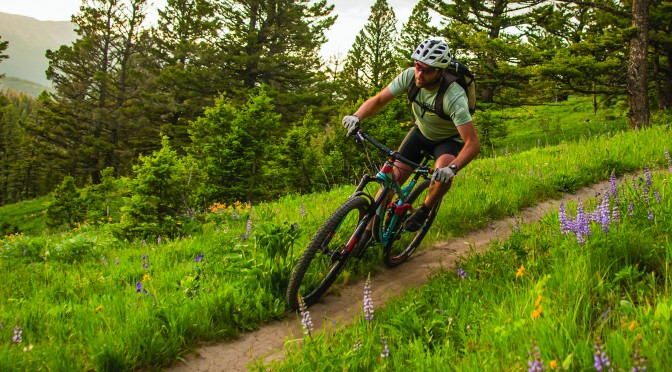
Take this for a spin: when it comes to mountain biking, Bozeman’s got it all. Countless alpine rides meander through lush forests and across rocky mountainsides, while fast, well-built, downhill-specific trails get the adrenaline flowing. We also have great desert-style riding just outside of town, as well as low-angle logging roads for leisurely jaunts. And when you don’t feel like driving, you can get your biking fix right out the back door.

Where to Go
Beginner
In town, hop on the Main Street to the Mountains trails at any point and go until the sun sets. Explore gravel paths through subdivisions in every direction, or pedal down the Gallagator to Peets Hill as you get your steering and balance dialed. Next you can tack on Highland Glen and Painted Hills. These trails are popular options for folks to rack up some convenient mileage before or after work. You can even ride all the way up Triple Tree if your heart and legs can handle it.

Now that you’ve gotten a feel for your bike, pedal up the old logging road alongside Bozeman Creek—also known as Sourdough. This all-dirt path climbs steadily for miles, and you can turn around whenever you’d like, to coast back down. If you take the left fork just before the bridge (about five miles in) toward Mystic Lake, the trail shrinks to singletrack and increases in difficulty—this route is called the Wall of Death.

Intermediate
Once you’re comfortable riding singletrack, head over to Crosscut for one of the area’s best trail systems. Here you’ll find a web of great single- and double-tracks for many different riding styles. Make a cross-country style loop from Loggers to the East Bridger North trail, or hop on the What Goes Up climbing trail to the Must Come Down trail for a flowy downhill experience.

Up in Hyalite, the Moser Creek area has several loop options, all of which feature shorter climbs than some of Hyalite’s burlier rides like History Rock. Although Moser’s trails are on the map, there are some confusing junctions, so do your research and figure out which loops you like most.

Advanced
South of town in the Gallatin foothills is Leverich, Bozeman’s most popular mountain-bike trail and the Custer-Gallatin National Forest’s first dedicated bike trail. During the summer, the parking lot overflows with vehicles, so make some biking friends to carpool with or park down at Nash Park and ride the road up. Leverich is meant to be ridden clockwise. Hop on the uphill-designated trail straight out of the parking lot, then climb a series of tough switchbacks and steep, rocky sections before finally topping out. Enjoy a stellar downhill with plenty of berms, jumps, hootin’, and hollerin’.

For more bike-specific trails, head to Copper City for a 20-mile network with something for everybody. Keep in mind that hikers and runners are also welcome here. You’ll find everything from a fun skills park and mellow beginner trails to rough and rowdy descents, including massive jump lines.

Saddle Up
First things first: you need a bike, and bikes are expensive, so you’ll need to overcome the initial sticker-shock. But consider yourself lucky, because our town runneth over with deals on gear. If you’re looking to spend as little as possible, start at a second-hand store, online marketplace, pawn shop, or the annual GVBC Bike Swap. If you’re willing to shell out for a new set of wheels, hit the bike shops. Remember that full-suspension is often preferred, but will be significantly more expensive to purchase and service. For some, especially casual bikers, buying a hardtail can save a grand or more.

Next, you’ll need a helmet, pack, and repair kit for those inevitable mechanical failures on the trail, plus the standard outdoor equipment: extra layer, rain shell, first-aid kit, and bear spray. Padded gloves are a great option, as are sunglasses to keep wind and debris out of your eyes while riding. You might also want some knee and elbow pads, because the crashing never stops, even after you improve.

Bikes are fun because they are freeing. How else can human power alone get you so far out there? But a malfunction is inconvenient at best, and extremely dangerous at worst. Knowing how to make a few fixes on your own will prove beneficial when something goes wrong out on the trail, and you’ll save some money because you won’t need to shell out cash every time you need work done. There are lots of great bike classes and resources in the area. Check in with local bike shops, or head to outsidebozeman.com/biking for more reading.

Etiquette
It’s always important to consider other trail users—whether they’re on foot, horseback, or motorized equipment. Use your discretion and pay attention. Spot approaching hikers as early as possible. They have the right of way, regardless of conditions, but still, there’s a good chance they’ll step off the trail to let you pass without interrupting your ride. If not, pull off to the side, give a polite nod, and carry on. Always give horses a wide berth to avoid spooking them, and when possible, pull off on the downhill side of the trail. Greeting the rider in a friendly voice often helps ease a spooky horse, too. If a biker comes upon another biker, the one going uphill has the right of way. If you’re traveling with a four-legged friend, make sure to keep her under control. And be prepared to clean up if she makes a deposit on or near the trail.

Trail preservation is the name of the game when on wheels. Since bikes damage the trail more than boots, it’s a rider’s responsibility to limit the impact. Don’t go out when trails are muddy. A good rule of thumb is that if you’re leaving deep marks in the dirt, you should consider walking that section instead of riding. If the conditions persist, turn back and try a different ride. Avoid biking off-trail, which damages vegetation and can create incidental and unwanted walkaround trails. If you come across a pool of water, take a few minutes to dig a little trench and drain it.


Winter Wonderland

by the editors

A guide to a winter paradise. 

Skiing might be the classic winter activity around here, but there are plenty of other things to do when the temperature plunges. Whether your legs are sore from hitting the slopes, or you’re just looking to try something new, here are a couple of our second-string favorites.

Sledding
Who said tearing down a hill on a sled is just for kids? Some folks say it only gets better with age. The bottom line is that it’s fun for anyone with a pulse. As affordable as it is accessible, sledding is a Montana pastime, and Bozeman has a number of popular spots worth checking out: Snowfill Recreation Area, Peets Hill, the Regional Park, and Langohr Campground up Hyalite are just a few. Really, any public land with a rising slope will do—just make sure the hill has a decent run-out.

Snowshoeing
If you can walk, chances are you can snowshoe—and have fun doing it. To get started, pick a trailhead. While packed snow offers easy walking, your best bet is to veer off-trail and make your own path. One of the major joys of snowshoeing is finding solitude and serenity in the winter woods. A beginner setup (shoes & poles) runs about $200 brand-new; if you’re on a budget, pick up a pair of hand-me-downs and use your ski poles.

Snowmobiling
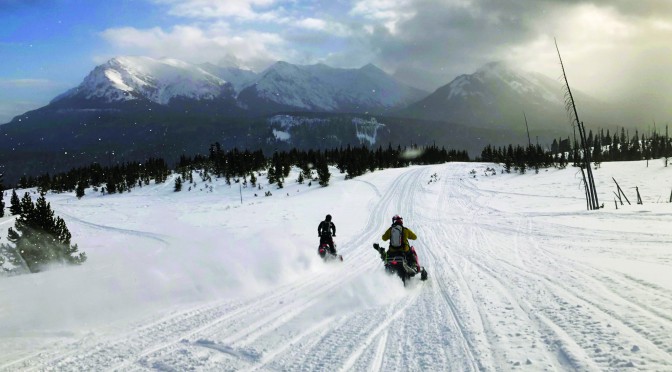
With the power of a snowmobile, there’s a lot you can see. Whether flying around the mountains of West Yellowstone, Big Sky, Cooke City, or Island Park, a high-speed adrenaline rush is hard to beat. There are many guide and rental services scattered throughout southwest Montana, and most places that rent snowmobiles supply snowsuits, helmets, and other accessories.

Skating
Every winter, three outdoor ice rinks pop up at Bozeman parks: Bogert, Southside, and Beall. Once the ice sets up for the season—normally in late December—the rinks stay open until 10pm every day. Southside and Bogert have warming huts for cozy cups of hot chocolate and a comfortable abode to put on and take off skates. Additional skating is offered at the Haynes Pavilion, home of the local hockey league; they rent skates for $5, plus a $5 entry fee.

Ice Fishing
Don’t knock it ’til you try it—ice fishing is a classic winter activity out West. Bring an ice auger, a fishing rod, warm clothes, and a sixer to stay true to the deep-seated roots of this activity. Hyalite Reservoir is a good option for trout, but the Bozeman Pond next to the mall is a little closer to home and has a plethora of bass and panfish. Just remember to check the ice thickness before venturing out too far. It takes four inches to support the weight of an adult human.

Events
The great thing about Bozeman is that no matter your taste, there’s always something going on. Here are a few noteworthy events for you non-skiers out there.

Ongoing
Learn to Skate – Bozeman. Get tips from the pros on how to slide smoothly on ice. Classes offered for ages four and up, from beginner to advanced. gallatinice.org

October
Hocktober Scramble – Bozeman. This fun hockey series gives players of all levels a chance to test their skills—and have a blast doing it—in competitive pickup games. bozemanhockey.org

January
SNöFLINGA – Butte. There’s something for everyone here. We’re talking snowshoe tours, fatbike races, avalanche-awareness classes… the list goes on. snoflinga.org

January
Wild West Winterfest – Island Park. Join cheery folk for a winter celebration complete with a parade of snowmobiles, sleigh rides, and a kids’ carnival. islandparkchamber.org

February
Skijoring – Big Sky. If you don’t already know what skijoring is, you’re in for a treat. Head to Big Sky for an old-time wild-west showdown. bigskyskijoring.com

Editor’s note: dates are subject to change. For the most updated information, visit outsidebozeman.com/events.

Charging the Slopes

by Adam Brown

Downhill skiing around Bozeman.

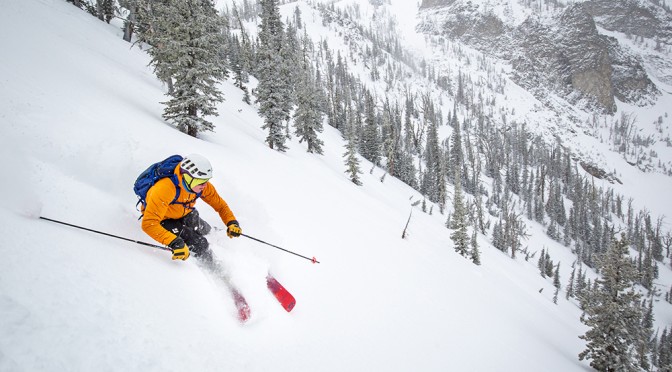
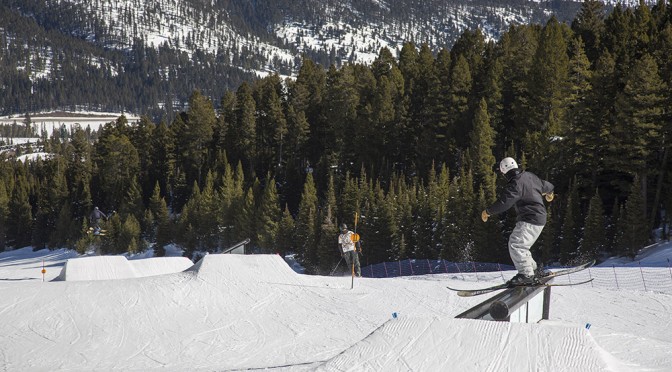
Winter in Bozeman is magical. Town turns into a winter wonderland adorned with lights and sparkling snow in every direction. And the most celebrated way to enjoy the season is on skis or a snowboard. Whether you’re looking to descend wild steeps, or just keep to the greens, there’s something here for you.

Where to Go
This corner of the Rockies is sprinkled with ski areas big and small, giving you a variety of options. To start, Bridger Bowl is Bozeman’s home mountain. It’s where most of us point our cars when the snow starts to fly. There’s plenty of mountain to go around, from the iconic Ridge to bunny hills and progression areas. It’s truly a fun spot for folks of all ability levels.

If you’ve got a lush bank account, splurge on skiing at Big Sky Resort. The terrain is epic, but ticket prices are cost-prohibitive for most folks.

But beyond Bridger and Big Sky, there are plenty more places to ski. These small-town ski areas offer a charming feel, low costs, and all-around good vibes.


Mountain                     Distance from Bozeman (miles)  Nearest Town
Showdown                                 110                                                  White Sulfur Springs, MT

Great Divide                              120                                                 Helena, MT

Discovery                                     130                                                Philipsburg, MT

Red Lodge                                    150                                                Red Lodge, MT

Maverick                                       160                                                Dillon, MT

Lost Trail                                        190                                                Sula, MT

Grand Targhee                           190                                                Driggs, ID.


Backcountry
Once you’ve got your chairlift fix, it’s time to set off on some human-powered outings. There are backcountry ski options in every direction.

Hyalite Canyon is a gold mine of opportunity. Lick Creek and History Rock are great options to get your footing in the area. Once you have those in the bag, you’ll find plenty more to discover up there.

The Mount Ellis area is another popular close-by touring area. The gentle slopes of Little Ellis can be accessed via a short skin from a trailhead not 20 minutes from downtown Bozeman, while the Ellis Burn offers a longer descent that catches plenty of east-blowing snow.

For route descriptions and other inspiration, visit outsidebozeman.com/ski-tours.

Gearing Up
On paper, skiing and snowboarding gear is pretty simple. But when the metal meets the snow, things can get more complicated. It’s easy to get lost in the fine details like sidecut radius, effective edge, chamber height, blah-blah-blah. If you’re new to everything, no need to drive yourself crazy with all that. Just worry about length and waist width.

Aim for skis that are about the same height as you are. If you’re a beginner, go a bit shorter; advanced, go a bit longer. 100mm is a good, versatile waist width around these parts. Narrower is better for groomers; wider is better for powder.

Snowboards should be somewhere between your chin and nose in height, and your boot’s toes and heels should barely hang over the edge when centered on the board. If they hang too far, look for a “wide” model board.

Boots are the most crucial part for a positive experience on snow, but are oftentimes overlooked. Get something that fits snuggly, comfortably, and strikes the right balance between supportiveness and flexibility.

When it’s time to hit the backcountry, you’ll need a ski-touring setup. You’ll want boots with a walk mode, and lightweight AT bindings to make the uphill more enjoyable—after all, that’s where you’ll spend about 95% of your time. Snowboarders will need a splitboard with special bindings, but can typically use regular boots for this endeavor. Don’t forget poles for the way up, too. Finally, grab some skins and you’re just about there.

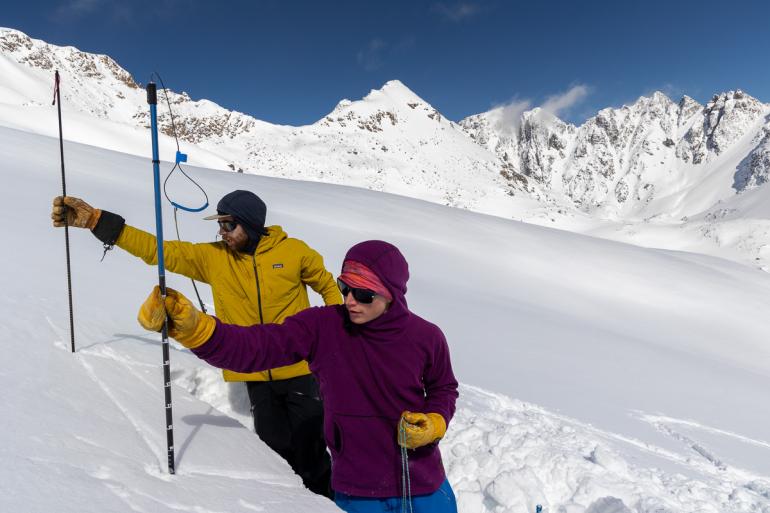
Avalanche safety gear is the last (but certainly not least) component. For baseline knowledge on snow safety, Staying Alive in Avalanche Terrain is the backcountry enthusiast’s bible. But if you’re going to be out in the backcountry often, take an avalanche-safety course. There are many organizations that offer field classes in the area, and our local avalanche center schedules free seminars throughout the season. Visit mtavalanche.com for a rundown. Lastly, pick up a beacon, probe, and shovel to round out your backcountry kit.

Etiquette
When out on the slopes, there are many official rules, and just as many unofficial ones. After all, everyone’s a critic. But at the end of the day, we’re all just trying to have fun at our own pace. We sometimes get ahead of ourselves or forget what we should be doing. Just try to be patient with people and help them out when you can. However, there are some important guidelines to ensure the safety of yourself and others on the mountain (a.k.a., the Responsibility Code). In fact, these duties are actually written into our state law, so it’s best everyone knows them well. Look ’em up online or review the posters at local ski areas.

When venturing out of the ski areas and into the backcountry, there is a different set of rules to follow, some more dire than others. To start, consider that most people head into the woods for solitude, so try to keep your volume to a minimum. Everyone has a right to experience the quietude of nature. Therefore, group size can be an issue—and is a matter of both impact and safety, because managing larger groups is difficult. Two to four people is a common sweet spot. Plus, it’ll put less strain on already limited parking areas. Furthermore, if another group has beaten you to a particular ski line, let them have it. It can be dangerous to pack too many people in a small area. Finally, skintracks are sacred, so don’t trash them with boot prints and postholes. Make sure to keep your pup’s waste off the track, too. And if you don’t like the pre-existing skintrack—or you’ve got a pack of dogs pockmarking a popular one—set your own, off to the side.

Events
Bozeman loves skiing. Here are some popular events to prove it.

November
Ski Swap – Bozeman. Out with the old, in with the new(ish). Don’t miss this one. Bridger Ski Foundation’s annual swap at the Gallatin County Fairgrounds offers huge discounts on quality gear. Drop your old gear off the day before. bridgerskifoundation.org

November
Opening Day – Big Sky. 36 lifts, 4,350 feet of elevation, and 5,800 acres to play on. Have at it—if you can afford to. bigskyresort.com

December
Projected Opening Day – Bridger Bowl. Weather permitting, chairs will start spinning for another season of winter fun at Bridger Bowl. Whether you’re first in line or last to leave, opening day is always a party. bridgerbowl.com

January
Community GS Racing – Bridger Bowl. See how you stack up against the rest of the local crowd in this series of two-run GS races. Categories for ski, snowboard, and telemark. bridgerbowl.com

February
King & Queen of the Ridge – Bridger Bowl. Think you have what it takes to hike the Ridge more times than anyone else? Give it your best shot at this annual fundraiser for the Avalanche Center. bridgerbowl.com

Editor’s note: dates are subject to change. For the most updated information, visit outsidebozeman.com/events.

Avy Savvy

By: Jack Taylor

A rundown on snow-safety resources.

“If you want to learn about something, going to school is just one way to do it.” —Doug Chabot, director of the Gallatin National Forest Avalanche Center (GNFAC)

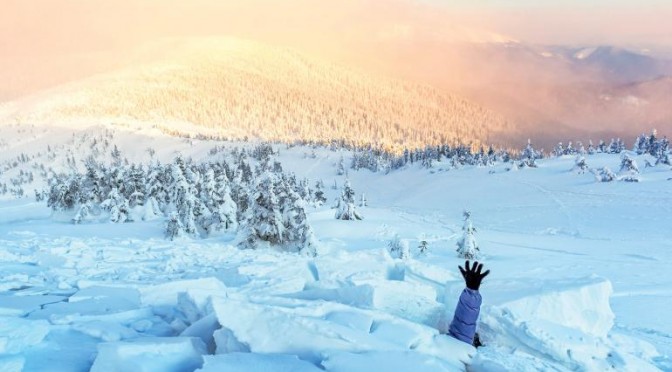
Avalanches: the big, bad monster hiding under the bed for backcountry skiers. Every year we hear about avalanche incidents and fatalities in our local area. The cold, hard truth is that death is an inherent risk when backcountry skiing.

Another truth is that avalanche education is widely available. In fact, avalanche-education events happen nearly every day throughout winter in the Bozeman area—many of them for free. Our local avalanche center puts out forecasts every day—also free. And there’s a limitless amount of information accessible on the internet—again, free.

It’s a common misconception that avalanche education is prohibitively expensive. Yes, a formal, accredited course is the gold standard. But if you can’t afford it, plenty of other options exist.

There’s no “one thing” you can do to be safe from avalanches—except for avoiding avalanche terrain altogether. Avalanche safety is an amalgamation of skills such as terrain recognition, snowpack assessment, weather observations, decision-making, leadership, and rescue. So this winter, whether you’re a first-time skier or seasoned vet, take some time to develop, enhance, or just brush up on your avy skills.

Print Resources
These publications are timeless resources, but bear in mind that experts are still learning more about avalanches every year—so pay attention to the publication date.

  • Staying Alive in Avalanche Terrain
  • Avalanche Essentials
  • Avalanche Pocket Guide
  • Snow Sense
  • Allen & Mike’s Avalanche Book
  • The Snowy Torrents
  • The Avalanche Handbook

Online Resources
The internet has made avalanche education more accessible (and more up to date) than ever. There are tons of resources to peruse: social media accounts, YouTube channels, incident archives, and so on. Here are some places to begin your search.

gooselakesnowpit-jacktaylor-2_lr

Training
From seminars, to organized practice sessions, to field clinics, there are free and low-cost avalanche-training events happening all the time in and around Bozeman. Check with any of the above resources, or your favorite local gear shop, for more info.

Courses
If you want to take a formal, accredited avalanche course, more power to you. These courses can be expensive, but the benefit is long-duration, hands-on instruction by professional instructors. Local course providers include:

  • Beartooth Powder Guides
  • Big Sky Backcountry Guides
  • Montana Alpine Guides
  • Montana Backcountry Yurts
  • Montana Mountaineering Association
  • MSU Outdoor Rec
  • Six Points Avalanche Education

Dos and Don’ts
A comprehensive list of avalanche-safety rules would take up this entire magazine. Here’s a cursory overview.

DO: Ask questions. Avalanche safety is all about gathering information. What safety gear do I need? How do I use it? Where can I ski that’s safe? How do I test the snowpack?
DON’T: Take every answer at face value. Instead, be investigative. Use reputable sources. Email [email protected] with any questions you have.

DO: Practice. Get to know your safety gear. Get to know the snowpack. Get to know your partners.
DON’T: Get complacent. Many accidents happen when the guard is down. Stay on your toes out there.

DO: Read, or listen to, the avalanche forecast. It’s published every morning in text and audio format. Many folks make a habit of listening to it in the car with their ski partners on the way to the trailhead.
DON’T: Hesitate to change plans. Higher wind gusts than expected last night? Dial it back. Warmer temps than expected today? Make a turnaround time. There’s always another day to ski.

Human Factors
Group dynamics and decision-making are critical components of backcountry skiing. Tomes have been written about human factors in avalanche safety. Start by looking up the F.A.C.E.T.S. acronym, which outlines common traps we fall into:

Familiarity – Feeling more comfortable in a place we’ve already been
Acceptance – Wanting to prove our worth to others
Consistency – Tending to stick with decisions we’ve already made
Expert Halo – Assuming that more experienced opinions are more important
Tracks – Rushing to ski a slope before it gets tracked out
Social Facilitation – Altering our risk tolerance when other people are watching

Knowledge vs. Experience
Reading avalanche reports, watching instructional videos, and taking courses will help you learn about avalanches. But at a certain point, you need to get out in the snow to get experience. This does NOT mean diving head-first into avalanche terrain. To the contrary, you can learn a lot about avalanches from well within the safe zone.

So go outside and bury a beacon. Dig a hole and look for weak layers. Look for signs of wind-loading or propagation. Compare a slope-angle map to your inclinometer. Ski powder, get face shots, and high-five your friends. If you’ve read this far, you’re already on your way to becoming a savvy backcountry skier.

Reading List

by Jack Taylor

You’ve made it to Bozeman, and you’re ready to explore southwest Montana’s endless expanses. But where to go first? Start by doing some research–it pays to have a plan for every excursion. Thankfully, you have a wealth of resources at your disposal to find the best trail, mountain, or stream for your next outing. Here are some of our top picks for getting the lay of the land.

Printed Guides
Nothing beats a quality, dedicated guidebook. Build a bookshelf collection for your favorite outdoor activities, and make sure these are included:

  • The Last Best Trails: Montana (SINTR, $30)
  • Day Hikes around Bozeman: (Day Hikes Books, $16)
  • Southern Montana Singletrack: (Beartooth Publishing, $30)
  • Bozeman Rock Climbs: (High Gravity Press, $25)
  • Paddling Montana: (Falcon Guides, $25)
  • Cast: Fishing Southwest Montana: (Outside Media Group, free)
  • Stalk: Hunting Southwest Montana: (Outside Media Group, free)
  • The House of Hyalite: (Joe Josephson, $36)
  • Peaks and Couloirs of Southwest Montana: (Chris Kussmaul, $45)

Printed Maps
Even in the age of digital everything, a good ol’ printed map is an invaluable resource. For close-to-home outings, start with the Gallatin Valley Land Trust’s map, which covers all the trails in and around Bozeman proper. it’s available from retailers around town for $3. (For a free digital version, go to gvlt.org/trails/trail-maps.) For Bozeman’s premier backyard playground, Hyalite Canyon, the nonprofit Friends of Hyalite makes a great fold-out recreation map in two versions: winter and summer. Pick one up around town for $5, or view it digitally any hyalite.org/recreation-maps. Beartooth Publishing is our go-to for detailed topographic maps of southwest Montana, complete with roads, trails, and usage restrictions; order print copies from beartoothpublishing.com or find them in local stories. Our favorite all-around option is Bozeman Area Outdoor Recreation Map, which sells for $16. For general trip-planning throughout the state, pick up a copy of the DeLorme Atlas & Gazetteer. For more detail, order zoomed-in, area -specific, waterproof maps from MyTopo, a custom-mapping outfit in Billings. A large-format wall map of southwest Montana from Basin and Range Mapping will help you see the big picture and make planning that much easier.

Apps
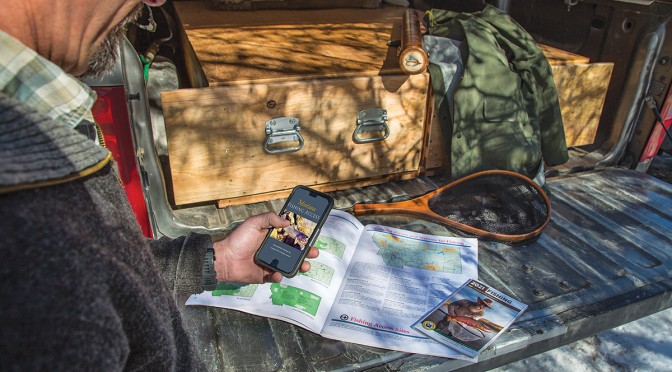
For hunter and anglers, there are three go-to apps you’ll want on your smartphone or GPS: Montana Fishing Access, Montana Hunting Access, and onWater. The first two are activity-specific and produced right here in Bozeman by Mountainworks Software; the latter is a leading map for fishing access, flows, and reports all in one place.

Websites
You’ll find plenty of information online to learn about local outdoor opportunities. For a collection of general resources, head to outsidebozeman.com and poke around–all day, if you’re not careful. Looking for specific trail descriptions? Check out outsidebozeman.com/trails, gvlt.org/trails/featured-trails, or trailforks.com. For updates and news in the world of mountain biking, including suggested rides, take a look at southwestmontanamba.org. Climbers, head to swmontanaclimbers.org for access information and stewardship projects. If you’re heading for the rivers, check out waterdata.usgs.gov for water levels, bigskyfishing.com for angling info, and fwp.mt.gov for fishing regulations. In the winter, if you plan on heading into the backcountry, stay updated with avalanche forecasts from mtavalanche.com. For general tips & tricks regarding outdoor safety and skills, check out outsidebozeman.com/skills.

Stores
Nothing beats a well-stocked retailer for hands-on gear comparison, along with free advice from local professionals. Southwest Montana teams with outdoor shops; stop in and hit ‘em up for tips and guidance. Just be sure to buy something while you’re there; Montanans are a friendly, helpful lot, but nobody likes a freeloader.

Nordic Nuts

by Eli Fournier

Nordic skiing around the Bozone.

Getting outside and staying fit during the warmer months is a breeze around here, but doing so in the winter is more challenging. The short days and long nights don’t make it any easier. Fortunately, Bozeman is a Nordic skier’s haven. On any given day, you’re apt to see Olympians, child prodigies, weekend warriors, and avid recreational aficionados all on the same trails. And with bountiful options both in town and just a few minutes’ drive away, getting out for a quick jaunt is easy.

Classic vs. Skate
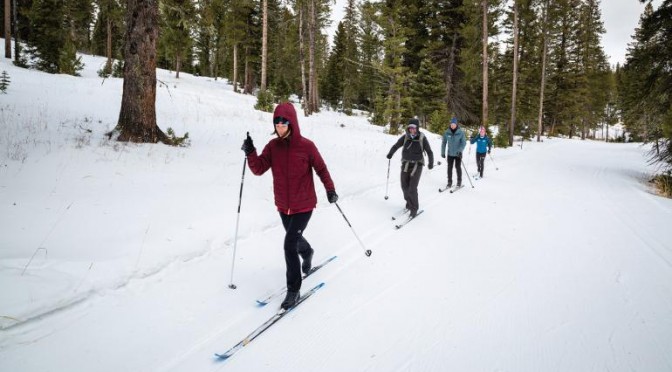
Nordic skiing can broadly be broken down into two general styles: classic and skate. The two differ in several key ways. Classic skiing is more beginner-friendly, and is done with a walk-kick technique similar to running, while skating is more of a moving duck-walk.

The skis used for each technique differ as well. Classic skis have distinct “kick” and “glide” zones on the bottoms that are waxed differently. As a lower-maintenance alternative to wax, a “fish scale” pattern on the kick section can provide traction and prevent backwards slippage.

The base of a skate ski, on the other hand, is consistent across the entire ski, coated entirely with temperature-specific glide wax that make the entire ski slippery. Good luck “walking” with these—you won’t make it far. Instead, a “skating” pattern (similar to ice skating) propels you forward.

Where to Go
Classic skiers can use both groomed and ungroomed trails, while skate skiers are limited to the former. We’ll touch on groomed trails first.

Right in town are the Sunset Hills and Highland Glen trail systems. Thanks to snowmaking and grooming operations by the Bridger Ski Foundation (BSF), these two tracks are among the first to come into shape, usually in early December. Hit them in the morning, or practice your agility on skis by navigating around gaggles of kids at afternoon ski lessons. Also in town is the Bridger Creek Golf Course. Park at the clubhouse and warm up on the flat lower loops before doing a few intervals on the upper, hillier section.

A 20-minute drive from downtown is the Sourdough Trail. This track is also groomed by BSF, but is open to shared use. Realistically, most hikers, snowshoers, and runners only make it up to “the bridge,” around mile four. Beyond that, the track is in much better shape, and continues another five miles to Mystic Lake, or over Moser Pass to the Moser trailhead up Hyalite Canyon.

Speaking of Hyalite, there are several groomed trails stemming from the main parking lot at Hyalite Reservoir. These trails snake around the lake and surrounding forests, and are groomed intermittently at best—usually just a few times per season—making them a better option for classic skiers.

For classic and skate skiers alike, Crosscut Mountain Sports Center is far and away the best locale for Bozeman-area Nordic nuts. The grooming is immaculate, with all trails being hit by the snowcat once or twice per day. Check their detailed forecast for hour-by-hour weather and snow reports.

A little farther away, and more suited for a weekend trip, are the West Yellowstonetrails. These tracks are a few thousand feet higher in elevation than those around Bozeman, and are the first to load in with snow every winter. In a typical year, college Nordic teams from across the country descend on West Yellowstone over Thanksgiving for an early-winter training trip. For serious skiers looking to test their skills (and endurance), there are a couple of annual races on the West Yellowstone trails.

For classic skiers looking to get off the beaten path, backcountry singletrack trails like Brackett Creek, Goose Creek, and Bear Canyon are good options for more solitary excursions.

Etiquette
The single largest Nordic-skiing faux pas is damaging a ski track—be that snowshoeing on a singletrack or walking on a groomed trail (with the exception of Sourdough—and even then, it’s important to minimize the damage by sticking to the side of the trail). Nordic skiing on a lumpy track is no fun at all.

Additionally, don’t be a snob. Nordic skiing ain’t a cheap sport, and especially in the competitive world, it can be a touch elitist. Do your part to counter that by being friendly at the trailhead and on the trails. If someone asks you a question about wax or conditions, share what you know in a non-condescending way to encourage more participation in the sport. And on Sourdough, be nice—a friendly request to keep the dog out of the track is way better than a nasty comment as you ski past. Honey catches more flies than vinegar.


Birds of a Feather

By Jamie Rankin

Bozeman brims with not only outdoor-recreation opportunities, but also close-knit communities dedicated to getting outside. If you’re looking to get involved in the outdoors and meet new people along the way, here are some local groups and clubs to scope out.

Running
Big Sky Wind Drinkers: started in the 1970s; they hold races year-round, as well as weekly fun runs in the summer and winter. winddrinker.org

Hunting & Fishing
Backcountry Hunters & Anglers: is dedicated to protecting fish & wildlife habitat, public land, and public access. backcountryhunter.org

MSU Fly Fishing Club: brings folks together to fish, tie flies, and get involved with local conservation events. @bozotroutbums on Instagram

Biking
Gallatin Valley Bicycle Club: holds training events, races, and group rides; and keeps members apprised of other local biking events. gallatinvalleybicycleclub.org

Southwest Montana Bike Association: is a nonprofit dedicated to maintaining trails and organizing group rides for those of all ability levels. southwestmontanamba.org

Paddling
Wave Train Kayak Team: teaches adult paddling courses of various skill levels. wavetrainkayakteam.com

Bozeman Whitewater: is a group that organizes day trips on local rivers. @Bozemanwhitewater on Facebook

Skiing
Bridger Ski Foundation: offers educational and competitive ski programs for all ages. bridgerskifoundation.com

XC Skiers of Bozeman: os a group dedicated to coordinating Nordic ski days. @XCSkiers of Bozeman on Facebook

Climbing
SW Montana Climbers Coalition: is a nonprofit that advocates for climbing access and works to maintain routes. swmontanaclimbers.org

Woman’s-Specific
Lady Runners Bozeman: connects runners of all skill levels in the Bozone. @Lady Runners: Bozeman on Facebook

Bozeman Pedal Project: is a biking Facebook group that coordinates group rides. @Bozeman Pedal Project of Facebook

Mountain Belles: and the MSU chapter of Backcountry Squatters organize trips of all type & activity year-round. Find the both on Facebook. @MountainBelles & @BackcountrySquatters