Prepped for Anything

by Jamie Rankin

Southwest Montana offers outdoor pursuits of all difficulty levels—and some that walk a fine line between risk and reward. But regardless of the challenge and level of expertise (or lack thereof), accidents happen. Every outdoor-goer should have knowledge on how to optimize safety, and how to handle an unexpected turn for the worse. Here’s a rundown on some courses we recommend for safety, survival, and for growing your outdoor skillset.

Wilderness First Aid
No medical experience? No problem. Wilderness First Aid (WFA) preps students on basic medical practices in an outdoor setting. From assessing a patient to improvising splints with outdoor gear, this course will prepare you to stabilize a situation until a trained medical professional can step in. There are many local course providers; a web search should lead you to a course that fits your schedule. For students, check out MSU’s outdoor-activity classes.

Wilderness First Responder
If you’ve mastered the basics and want more medical preparation, take a Wilderness First Responder (WFR) course. These 80-hour courses are a mix of classroom time and accident scenarios; they teach students the skills needed stabilize a patient for an extended period of time. The same organizations that offer WFAs typically teach WFR courses as well.

Belay Certification
If you want to get into climbing but aren’t sure where to begin, Spire Climbing Center is a great place to start. As a member, you get access to beginner- and intermediate-level climbing instruction; including auto-belay, standard belay, and more. Already know the basics? Spire has an assortment of classes and clinics for intermediate and advanced climbers, too. 

Green University
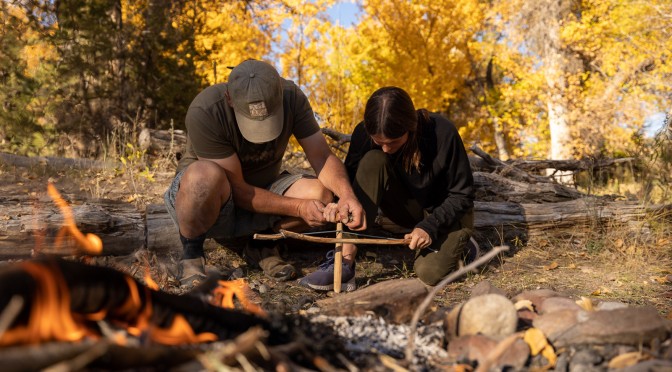
Botanist and outdoorsman Thomas Elpel holds workshops, classes, and events focused on wilderness survival skills and sustainable living. From fire-starting, deer processing, and foraging to making buckskin clothing, Elpel will teach you how to be confident and self-sufficient in the woods.

Avalanche Courses
When venturing into the backcountry in winter, avalanche danger is ever-present. Snow conditions can be tricky to read, so a course is critical in gaining basic competency—both in avoiding slides and rescuing fellow skiers should they be caught in one. Courses can be taken through Gallatin National Forest Avalanche Center (GNFAC), Montana Alpine Guides (MAG), MSU, Beartooth Powder Guides, and Big Sky Backcountry Guides.

Mountain-Bike Clinics
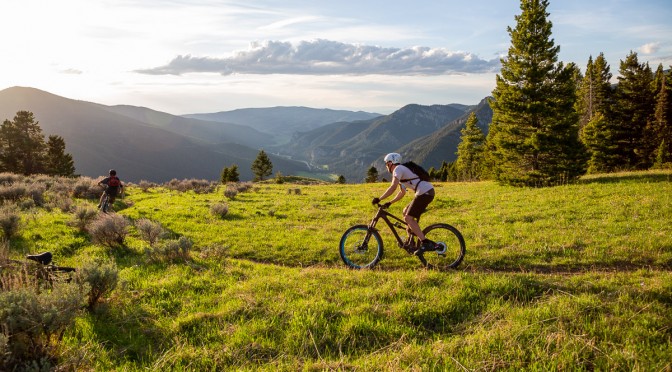
Crosscut Mountain Sports Center offers an assortment of mountain-biking clinics for all skill levels and ages, including introductory courses, skills-specific classes, and even guided rides. Developing your two-wheeled talent will not only allow you to push yourself in a safer manner, but will also make the sport more fun.

Path to Freedom

by Jack Taylor

If you’ve come to live in Bozeman, outdoor activities are surely a big part of why you’re here. So first of all, welcome: you’re in the right place. And now that you’ve picked up a copy of the Blue Light Guide, you’re going to be pointed in all the right directions.

This guide covers everything from outdoor etiquette, to gear recommendations, to activity-specific advice on where you can delve into southwest Montana’s spectacular landscapes. So take it all in, because around here, we pride ourselves on outdoor savvy. That doesn’t mean you have to run faster, climb higher, or ski harder than anyone else. Rather, it means that you’re doing it right: keeping outdoor spaces clean, respecting wildlife and other people, and above all, having a damn good time out there.

This place may seem daunting at first. Trust me, we’ve all been there. When I first arrived in Bozeman, I had so much gusto for adventure—but nowhere to point it. Where’s the best place to go hiking? Camping? Skiing? Climbing? I want to do it all! And I want the very best of it.

There was some trial and error. Trying new activities led to bumps and bruises. Meeting new adventure buddies made for some mismatched partnerships. Spending money on outdoor gear dwindled my savings account. This is a process we all go through. There’s no right or wrong way to do it—the road will inevitably have some peaks and valleys, just like all the peaks and valleys you’ll soon be exploring.

In due time, you’ll find your stride, settle in, and call Bozeman home. Because as long as you love spending time outside, you’ll naturally fit with the Bozeman crowd. So turn through these pages and set your sights. Once you’ve hit all the popular destinations, wander off the map. Find your own little slice of the outdoors in southwest Montana—after all, there’s plenty of it to go around. The journey will be trying, rewarding, and liberating. And in the end, you’ll be better for it. Happy trails, newcomer.

Idiom Index

Welcome to Montana—as you’ve probably noticed, there’s some lingo getting thrown around that you might not have heard before. Study this cheat-sheet to familiarize yourself with a few common terms & phrases, along with likely scenarios, before making a fool of yourself out there on the streets of Bozeman.

Road soda (a.k.a., roadie)
It’s Friday afternoon, you’re done with midterms or a big project at work, and it’s time to head out for a long weekend in the mountains. “Hey, pass me a roadie, would ya?”

Tag soup
You’re sitting around the dinner table, choking down the cheapest ground beef you could find at T&C, explaining to friends that you came home empty-handed from a hunting trip. “Tough conditions out there; we ate tag soup.”

No friends on a powder day
Your ski buddies stop at a flat spot to regroup and declare how great the day is. You come flying by, blasting them with snow, carving turns across the untracked meadow they were all admiring. “No friends on a power day, suckers!”

Cowboy (or cowgirl) up
Your friend’s being a ninny: “Wow, that’s a lot of whitewater! House Rock looks pretty scary. It never feels that big from the road. What if I flip?” “Aw, put on your PFD and cowboy up already.”

Whiskey ditch
You’ve got an exam tomorrow and need to slow down, but can’t leave the bar yet ’cause there’s a really hot guy who keeps checking you out. “Bartender, I’ll take a whiskey ditch.”

Ain’t my first rodeo
As you inspect your flat mountain-bike tire, blown halfway up Leverich, your new riding partner comes in hot with a patch kit and unsolicited instructions. “Easy, tiger. I got this. It ain’t my first rodeo.”

Crick (as opposed to “creek”)
You’re chatting with a rancher about hunting his place and where to leave your truck. “Should I park over there by the crick?”

Bikini hatch
Your friends want to fish the lower Madison on a blazing hot Saturday afternoon. “Are you kidding me? The bikini hatch will be full swing. You’re more likely to hook a tuber than a brown.”

You don’t have to outrun a griz, just your friends
Your friend from Wisconsin is a little worried about going backpacking in the Madison Range; she heard about all the bears in those mountains, and how fast they are. “It’ll be fine! Just remember, you don’t have to outrun a griz, just your friends.”

I’ll never leave Montana, brother
You’re a recent engineering graduate, still living on ramen and Coors Light. Your friend asks, “Where are you gonna go now, to make a pile of money?” “I’ll never leave Montana, brother.”

The Bozeman Essentials

In Bozeman, it’s impossible to do it all—but if you’re like us, you strive to. Every season presents its own set of outdoor challenges and opportunities, but there are a few activities so renowned that they bear repeating on a near-annual basis—classics, you could call them. Below are some of our favorites. Do them all and you’re one step closer to becoming a true Bozemanite.

Bike Hyalite Canyon
You may have heard of Hyalite for any number of reasons, including, but not limited to: fishing, running, hiking, and ice climbing. But thanks to all those activities, it sees more than its fair share of traffic—to the point of madness. From April 1 – May 15, however, the road is closed to motor vehicles. Hop on a bike and enjoy some of the best road riding of the year on Hyalite Canyon asphalt.

Fish Gallatin Canyon
Or “the Canyon,” as locals call it, Gallatin Canyon served as the backdrop for A River Runs Through It, and has been attracting anglers for a long, long while. It’s tough to beat casting dries to rising trout just 30 minutes from town. You’ll find everything from riffles to deep pocket water and thin eddy lines, with a plethora of hatches throughout the season. With fishing this good, though, we can’t guarantee you elbow room.

Paddle the Mad Mile
Fishing ain’t the only thing the Gallatin’s known for. Come spring, before the bugs are out ’n’ about, paddling takes the cake on this river’s frothing waters. Warm up on an easier section between Moose Creek and Lava Lake, then run a gauntlet of foamy rapids known as “the Mad Mile” downstream to Upper Storm Castle. Navigate this section successfully in a watercraft and earn a badge of Bozeman honor.

Float the Lower Madison
Whether in a drift boat, raft, inner tube, or with nothing but a life jacket, floating the Lower Madison is a staple Bozeman experience. Known to locals as the “bikini hatch,” this mid-summer lazy-river float is a Mecca for dirtbags, yuppies, weekend warriors, and college students alike. Grab a sixer and hit the water.

Climb Neat Rock
With routes ranging from 5.6 to 5.14, there’s something to suit every climber’s fancy at this near-roadside crag on the banks of the Madison River. The rock is solid gneiss and the dry environment makes for good climbing conditions almost year-round. Make it a double-header with the aforementioned float, or spend a night at one of many nearby campgrounds for a weekend getaway.

Bike Leverich
On two wheels, you won’t find a more quintessential ride. This dirt singletrack loop climbs for nearly a thousand feet, then bombs right back down—just make sure you ride it in a clockwise fashion. Serious bikers have been known to lap it, and don’t be surprised if you get passed by these fellers your first time out.

Ski Bridger Bowl
Just 16 miles from downtown, the skiing doesn’t get much better than this. With the “Bridger Bowl Cloud” often hanging over the mountain, the snow’s decent, too. Ski a few laps before work, or play hooky from school to bootpack 600 feet to “the Ridge.” Don’t tackle it as a beginner, though, ’cause you’re likely bound for some serious airtime.

Hike Sacagawea Peak
The queen of the Bridgers rises to just shy of 10,000 feet in elevation, while a convenient access road to Fairy Lake makes tagging this summit a fairly casual outing. You’ll start below treeline, but soon emerge into the alpine zone dotted with crystal-blue lakes, snow-choked gullies, and jagged ridgelines. Fret not; the trail itself follows easy terrain, and the views from the top are impeccable.

Post Wisely

by Corey Hockett

We live in a funny time. An age where announcing one’s experiences outweighs living the experience itself. If you don’t have a picture, did your trail run even happen? If your photo wasn’t affirmed with 1,000 cyber hearts, was your bike ride even worth it? If you climb a mountain, but fail to take a reel of it, were you there at all? So goes the thought process of the digital age.

Let me preface this by saying that I am a millennial who has social-media accounts and does in fact post from time to time. I have a camera and I understand the appeal of sharing images with one’s community. But must we do this with every last activity, every single outing? Is it too much to exercise a little discretion? We in Montana are still lucky enough to enjoy places to ourselves. Let’s do our best to keep it that way.

For the locals out there grumbling aloud about busy trailheads, head to the next drainage over. The one without a parking lot. Sure, it might be a little further from where you intended to go, but isn’t that what we’ve loved about this place all along? The opportunity to explore and discover?

Now, for those of you who have stumbled upon an area seemingly unbeknownst to others, please, for the love of all that is holy, keep it to yourself! Recognize the sacredness of such a thing and don’t ruin it by advertising it to your whole social network. Step back and realize that the reason the place seems so lovely and enjoyable is that there’s nothing around but the natural world. Crazy, huh?

As bewildered as I am over this, it’s clear that some folks are unable to move through their days without providing constant updates to their digital followership. Slaves to their vibrating, attention-sucking, brain-numbing devices, they need affirmation from others that the life they live is in fact a good one. To this, I say fine. If you want to post a photo of all the fish you caught in your secret hole, great—just don’t include easily recognizable landmarks. This same stretch of water could be quietly enjoyed by others, too. Choose a frame with an indistinct background and a caption that conceals the location’s identity. You get to show off your fish and preserve the solitude for others. Win-win.

I understand that as an outdoor guidebook, we play a role in the increased visitation to certain locations. There’s no way around it. However, we do so judiciously. No place that we promote, in print or online, is a secret spot—they’re all well-documented on maps and in other guidebooks; they’re all well-known among the local outdoor populace. “Secret” and “favorite” are not the same thing. Part of our job is to facilitate outdoor recreation—and newcomers (to town, or to a certain activity) need to know where to go. Sometimes that helps protect a place from mankind’s ravenous propensity to rape, pillage, develop, and commodify; other times, it simply leads to overcrowding. This is a conundrum, and if you think we could do a better job, tell us.

The point is, we live in a time where social media is everywhere. Like it or not, this includes our outdoor spaces. Thus, our responsibility—and I mean everyone here—is to use it in a manner that encourages healthy engagement with nature. What does “healthy” mean? In loose terms, it’s creating awareness for wild places under threat while keeping quiet about the so-called “undiscovered” spots. As for knowing which is which, it can only be up to the individual. But it ain’t that tough.

Post wisely, my friends.

Lines on the Water

by Eli Fournier

Fly-fishing in Southwest Montana.

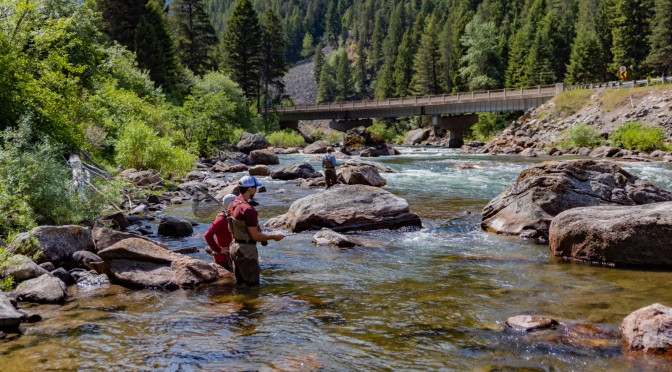
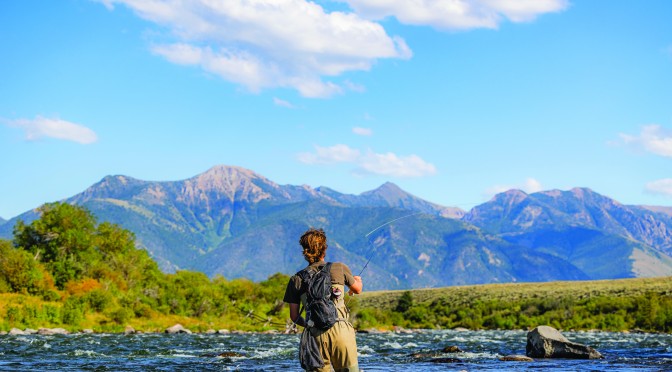
Welcome to the fly-fishing capital of Montana, if the not entire West. If you come in search of piscine pursuits, look no further. Indeed, the fishing here lives up to its reputation, and come August, the town dress code might as well be quick-dry shorts, a sun hoody, sandals, sunglasses (with Croakies), and a lucky fishing hat. But aside from looking the part, knowing a few basics is also important. Here’s a rundown on a few of the most popular local waters. For more, pick up a copy of the Cast fishing guide, available for free at most fly shops and outdoor stores around town.

Where to Go
Madison River
From the “50-mile riffle” on its upper section, to Bear Trap Canyon and the flat meanders of its lower section, the Madison has plenty of options. A driftboat or raft is the best way to access the upper, but wading is equally effective on the lower. The flows are dam-controlled, but the water can still blow out from high-flow feeder streams. Early summer is caddis; mid-summer, salmonflies; and late-summer, mayflies and terrestrials.

Gallatin River
Perhaps the most famous trout river in the West, thanks to A River Runs Through It, the Gally is worthy of the hype. The river begins as a trickle in Yellowstone National Park and ends at its confluence with the Jefferson and the Madison at Missouri Headwaters State Park. Excellent fishing is to be had throughout, although “the Canyon” is the most-heavily pressured thanks to its fish-laden pockets, cool water temps, and easy access. The river is best fished wading from the banks—in fact, it’s illegal to fish from a boat on the upper section down to the confluence with the East Gallatin River, at Manhattan. If you’re just after a few casts in the evening, the Gallatin is tough to beat.

Yellowstone River
The Yellowstone originates south of the Park in some of the most remote country in the Lower 48. When folks around town refer to fishing on the ’Stone, however, they’re typically referencing the Paradise Valley section, from Gardiner to Livingston, and even further downstream to Big Timber. The fishing is dictated by flows. Springtime pre-runoff can be good, but the real goods are had once runoff subsides in late June. The Yellowstone is primo streamer water early-season, and dry-dropper territory later in the summer. It’s a big river, and wading can be difficult—but it’s not impossible. The best way to fish the Yellowstone is from a raft, stopping at good runs to wade.

Lakes
Both alpine lakes and lowland reservoirs can be productive at the right time of year. Just after ice-off in May, trout tend to cruise the shorelines of Ennis, Quake, Hebgen, and Henry’s lakes looking for easy meals. All these stillwaters can be effectively fished from shore in early spring before the fish move out to deeper waters. Once things warm up, the high-mountain lakes really turn on. But with so many possibilities in the Gallatin, Absaroka, and Madison ranges, narrowing down the options is challenging. Fortunately, there are a couple of good guidebooks, with one of the best being Flyfisher’s Guide to Southwest Montana’s Mountain Lakes. If you’re heading anywhere in the high country, bring a rod along—there are fish in just about every lake, pond, and creek in this corner of the state.


Catch & Release vs. Keep & Eat
On heavily-pressured rivers—all the ones mentioned above—catch-and-release is highly encouraged. While it’s legal to keep fish on some of these rivers, if every angler kept a daily bag limit, there would be no fish left. It’s acceptable to bonk a fish for dinner every now and then, especially if it’s unlikely to survive upon release; just try not to make a habit of it. A few standard catch-and-release practices: play fish quickly, keep them in the water, limit handling to a bare minimum, and use barbless hooks.

Bonking fish in reservoirs or at high mountain lakes is less frowned upon. In fact, a lot of folks on big alpine backpacking trips don’t bring much in the way of dinner food, instead relying on trout to fill their stomachs. Bring a packet of Idahoan mashed potatoes, some salmon-rub, and tortillas for gourmet trout burritos.

Etiquette
Fishing etiquette is pretty simple: don’t be a dick on the river. Chat with other anglers, give folks space, share your knowledge with those less experienced, and if floating, don’t dilly-dally and cause a traffic jam at the boat ramp. With some basic courtesy, you shouldn’t run into any issues on the water.

Under the Stars

by Jack Taylor

A guide to camping around the Bozone.

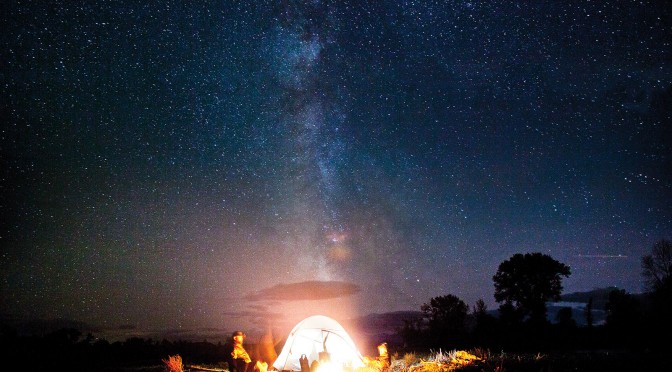
A camping or backpacking trip is one of the easiest, and quite possibly the best, ways to immerse yourself in the outdoors. Spending a night (or multiple nights) in the woods will calm your nerves, humble your mind, and invigorate your soul. When a trip is well executed, you’ll be rewarded with a sense of achievement and satisfaction. If things go awry, you’ll build resilience, learn from your mistakes, and certainly get a good story out of it. Most trips are a mixed bag of solid accomplishment and unplanned adventure. Here are some tips to help with logistics, so that you’ll have greater capacity for exploration. After all, you’d rather come home with a boastful tale about getting lost in the dark and navigating by starlight, than a dejected account of bringing the wrong type of stove gas and eating all your meals cold-soaked.

Where to Go
Our favorite place to go camping is… wait, did you really think we were going to tell you? Part of the fun in planning a trip is figuring out where to go! There’s nothing so satisfying as the process of discovery. That said, here are some general guidelines as you’re poring over the maps.

U.S. Forest Service land is perhaps the most popular option for overnight outings around here. From established campgrounds equipped with amenities, to vast swaths of unmarred wilderness, you’ll find the full gamut of camping and backpacking opportunities. Most of our nearby mountain ranges are almost entirely designated as National Forest (read: public) land.

State Parks and Fishing Access Sites (FASs) offer state-managed campgrounds, usually adjacent to water bodies or historical sites. Using these lands requires the purchase of an $8 annual Montana Conservation License, which can easily be obtained at fwp.mt.gov. The fee goes directly toward maintaining the sites.

Bureau of Land Management (BLM) land is more sparse around Bozeman, but it offers camping opportunities near some popular recreation sites. The campsites are generally primitive, with no amenities—save perhaps a fire ring. So plan ahead, and have a means of disposing your waste.

On that note, regardless of where you go, practice leaving no trace. Look up the “Leave-No-Trace Principles,” or just follow this rule: leave it better than you found it. That means no trash, a clean firepit, and in general just an attractive campsite for the next person who comes along.

Group Size
The ideal number of people for a camping or backpacking trip will depend on your objective. But whether it’s a solo peak-bagging mission or a river trip with a crowd of two dozen, group size is an important consideration in planning.

When solo, you can make all the decisions yourself with no external conflict. You’ll be less distracted, and will probably feel more immersed in the environment. But solo outings are riskier, as you’re self-reliant. Plus, in a group, you can work as a team and socialize. Conflict is almost inevitable, but working through it is a good skill to practice.

In the backcountry, where we go to experience pristine nature, groups of more than five people can have a significant impact on other travelers. If you’re in a large party, consider splitting into smaller teams while on the trail. You can reconvene at camp, but be especially mindful of encroaching on others’ space.

Food
Meal-planning is one of the biggest challenges of a camping trip. Our best advice is to learn from experience. If you’re happy eating freeze-dried meals, great. If you’re culinarily inclined, camp-cooking can be an excellent outlet for creativity. Don’t be afraid to bring some perishable items for the start of your trip—especially if you’re camping near a car or boat with a cooler. Unrefrigerated meat should be fine for a day; veggies up to a few days. Canned food is heavy, but increases your options. Dehydrating your own food will save weight, and is less expensive than purchasing freeze-dried meals. Pre-made PB&Js are great for a quick lunch.

Cooking
There are two ways to cook while camping: on a stove or over a fire. A stove is easier and more reliable (e.g., it works in the rain), so it’s probably your safest bet. The two most popular types run on butane canisters or white gas. Butane stoves are simple and compact, but can struggle in cold temps or at high elevations. White-gas stoves are more complicated, but they’re versatile and reliable once you learn the maintenance procedures.

But there’s a primal satisfaction in cooking over fire—and an art to doing it right. If you choose this route, be sure to abide by fire restrictions. Don’t burn the forest down, and don’t leave a mess of a firepit—especially if there wasn’t one already established.

Bears
Grizzlies are a real concern when camping in southwest Montana. Hang your food, and cook at least 200 feet away from where you sleep. Bring nothing but water into your tent—even a tube of toothpaste can tip off a grizzly that there’s something tasty nearby.


Big Sky Boatin’

by Corey Hockett

Paddling in Southwestern Montana.

Montana’s boating scene often gets shrugged off like a younger brother. Pitted against other western states, its reputation falls short of Idaho’s coveted multi-day trips and the Northwest’s epic whitewater. This may be why river life in the Treasure State is overlooked and underrated. Regardless, it’s all good, because in Bozeman, you’re teed up for just about all you can ask for—and usually without the out-of-state crowds joining you.

Gallatin
A mere 20 minutes from town, the Gally is our closest gem. A low- to medium-volume river, typical flows range from 300-1,000cfs at the gauge at Gallatin Gateway, with peak runoff landing somewhere between 5,000 and 6,000. In June 2022, spring rains and a melting snowpack cultivated a raging torrent over 8,600cfs, the highest ever recorded since the gauge was installed in 1994.

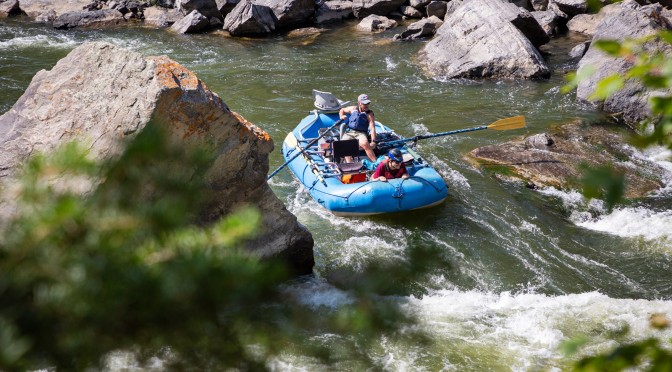
As a shallower river, the rapids on the Gallatin vary in shape and size and are more technical in nature. Rafters are tested with regular rock-dodging, while smaller crafts can pick from a selection of routes ranging from small drops to demanding boofs for kayakers. Most of the whitewater lies between Deer Creek and Lower Storm Castle. Intermediate paddlers should stick to sections above Lava Lake. Below this access is the formidable Mad Mile. At flows above 3,000cfs, this is a continuous Class IV run. If this doesn’t sound like you, and lounging on the raft with a beer and your dog is more up your alley, check out the river between Manhattan and Missouri Headwaters State Park. Appropriate options include canoeing, rowing a driftboat, and floating on an inner tube.

Yellowstone
The longest freestone river in the Lower 48, the Yellowstone forms deep in the Absaroka Range and flows for nearly 700 miles through mountain gorges and across prairie flats until it joins the Missouri near Williston, North Dakota. Apart from its tumbling cascades inside the national-park boundary, which are off-limits to boaters, the best rapids lie between Gardiner and Carbella Campground. Here, two supreme sections of whitewater await the eager river-runner.

The first three miles downstream of Gardiner yield playful wave trains (Class II-III) all the way to McConnell Landing. The river mellows out for the next ten miles, but picks back up where a narrow gorge constricts near the Joe Brown put-in. The fabled Yankee Jim Canyon is a four-mile stretch with three notable features: Boat Eater, Big Rock, and Boxcar rapids. At low to medium levels, intermediate paddlers and rowers will find it exciting but manageable. When flows crest above 15,000cfs, think twice before going down. While the waves and holes become munchier, the strong eddy fences and unpredictable boils are just as likely to tip an inexperienced boatman.

Below Yankee Jim, the river’s character relaxes significantly. Occasional rapids pop up now and again, but for the most part the Yellowstone is a fishing-float from here out. Downstream from Livingston, one will find more intermediate waves between Springdale and Grey Bear. While the river appears slow from a distance, it’s worth noting that the current is sneakily strong and should be treated with utmost respect.

Madison
Renowned as a destination fly-fishing river, the Madison is more apt to attract anglers than it is paddling enthusiasts. That said, Bear Trap Canyon holds something for everyone. Set in the Lee Metcalf Wilderness, the river’s remoteness combined with its impressive rapid lineup make it one of the state’s most celebrated whitewater runs.

Below Ennis Lake, one can select from two put-ins. Entering directly below the dam will insert you into the action right away, with Double Drop Rapids (Class IV) right around the corner. For those who want a slower start, drive all the way to the end of the road and launch at the powerhouse. In one quick mile, Whitehorse Rapid provides an excellent warm-up with a steep gradient and a forgiving wave train. The meat of the run, however, is a distinctive S-turn that occurs exactly halfway down. The infamous Kitchen Sink is a string of drops that are demanding and technical at all water levels. Scout (or portage) on river right, and make sure to watch for rattlesnakes along the way. The second half of the canyon offers plenty of Class II rapids, as well as the unmistakable Green Wave, an exciting Class III to keep you honest.

For folks less interested in whitewater, the lower Madison provides a number of great scenic floats all the way to Headwaters State Park, with Warm Springs to Black’s Ford being the most popular tubing stretch.

Gear
Like many other outdoor activities, boating can take up a sizeable portion of the gear closet (actually, you’ll probably need a garage). If you’re new to the sport, the one thing you can count on needing, no matter when you go, where you go, how you go, is a PFD. Montana law mandates that you have one in the boat with you, and if you’re going to be running any sort of whitewater, we recommend not skimping on the quality.

No matter what type of craft you’ll be taking, drybags are handy. To keep an extra set of clothes, your phone, sunscreen, etc., a 20-30L bag will do just fine. For multi-day trips, look for an additional large bag (70-100L) to hold your tent, sleeping bag, and other big items. Summer is a mere three months here, and if you like to be on the water any longer than that, expect unpredictable temps. Wetsuits and drysuits allow people in small crafts to paddle comfortably throughout the spring and fall. Same goes for pogies; they can be a saving grace for your hands on a cold day. Last but not least, we’re not here to police you on risk-taking, but if you intend to dabble with some faster water, it’s a good idea to have a helmet. Yours truly has bonked his head numerous times in the Mad Mile alone. Without the brain bucket, I may not even be around, or at least coherent enough, to pen this article.

Etiquette
River manners are not hard to follow; all it takes is some self-awareness and a bit of planning. Rule number one: do not clog up the boat ramp. If you’re launching a driftboat or raft, put on sunscreen, rig up your fishing rod, and pack the cooler away from the ramp, in a manner that does not impede or prevent any other party from accessing the water. You should feel anxious every time your truck is on the ramp. Get in, get out.

While on the water, give people space. Don’t pull out from an eddy directly in front of a group that’s in the main current, and grant people fishing from the bank a wide berth. In essence, it’s the Golden Rule—follow it and the river will treat you right.

Events
May-August
Kayaking Lessons – Bozeman. Whether it’s a six-week class or a single-day private session, Wave Train Kayak offers a fleet of courses to help you work on everything from basic paddling technique to advanced whitewater mechanics. wavetrainkayakteam.com

June
Gallatin Whitewater Festival – Bozeman. Suit up for a rip-roarin’ time in high-water season. Participate in one of (or all) three whitewater races including a slalom, individual timed, and a mass start. gallatinwhitewaterfestival.com

Wednesdays
Community Paddle Day – Bozeman. Meet like-minded folks and paddle a section of choice on the Gallatin after work. wavetrainkayakteam.com

July
Annual Yellowstone River Boat Float – Livingston. Join an annual tradition that stretches back nearly 60 years and float from Livingston to Columbus on a hot weekend in July. facebook.com