Category Archives: Preparation

In the Loop

by Jack Taylor

With mountains and rivers in every direction, where should you go first? To school, that’s where. Before heading into unfamiliar terrain, it’s important to be armed with the proper knowledge, skills, and equipment. Make a plan for every adventure, no matter how big or small, and always have a backup plan. Here are some essential outdoor resources to get you started:
BooksAndMaps-1

Guidebooks
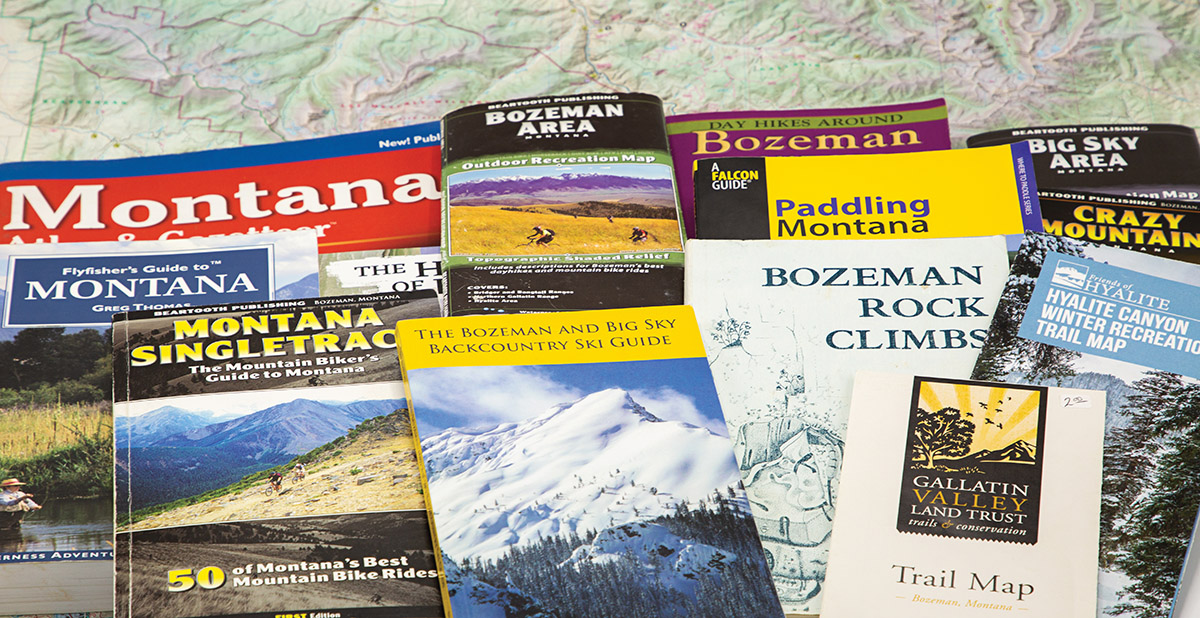
Nothing beats a quality guidebook when plotting an excursion. Build a bookshelf collection for your favorite outdoor activities. Here are some of our top picks:

Day Hikes around Bozeman (Day Hikes Books, $16)
Southern Montana Singletrack (Beartooth Publishing, $30)
Bozeman Rock Climbs (High Gravity Press, $25)
Paddling Montana (Falcon Guides, $22)
Flyfisher’s Guide to Montana (Wilderness Adventures Press, $30)
The House of Hyalite (Joe Josephson, $36)
Backcountry Skiing Bozeman and Big Sky (WS Publishing, $40)

Printed Maps
Even in the age of information technology, a good ol’ printed map is an invaluable resource. For close-to-home outings, start with the Gallatin Valley Land Trust’s map, which covers Bozeman’s local trails. It’s available from retailers around town for $3. (For a digital version, download one for free at gvlt.org/trails/trail-map.)

Beartooth Publishing is our go-to for detailed topographic maps of southwest Montana, complete with roads, trails, and usage restrictions; order print copies from beartoothpublishing.com or find them in local stores. Our favorite all-around option is Bozeman Area Outdoor Recreation Map, which sells for $14.

For general trip planning throughout the state, pick up a copy of the DeLorme Atlas & Gazetteer (DeLorme, $24). For more detail, order zoomed-in, area-specific, waterproof maps from MyTopo (mytopo.com), a custom-mapping outfit in Billings. A large-format wall map of southwest Montana from Basin and Range Mapping (basinandrangemap.com) will help you see the big picture and make planning that much easier.

Apps
For hunters and anglers, there are only three apps you need on your smartphone or GPS: Montana Fishing AccessMontana Hunting Access, and OnX Hunt. The first two are activity-specific and produced right here in Bozeman by Mountainworks Software (emountainworks.com); the latter is the leading map for property-ownership boundaries and is based in Missoula (onxmaps.com).

Websites
You’ll find plenty of information online to learn about local outdoor opportunities. For a collection of general resources, head to outsidebozeman.com/directories. Looking for specific trail descriptions? Check out outsidebozeman.com/trails. For updates and news in the world of mountain biking, including suggested rides, take a look at southwestmontanamba.org. Climbers, head to swmontanaclimbers.org for access information and stewardship projects. If you’re heading for the rivers, check out waterdata.usgs.gov for water levels, bigskyfishing.com for fishing info, and fwp.mt.gov for regulations. In the winter, if you plan on heading into the backcountry, stay updated with avalanche forecasts from mtavalanche.com. For general tips & tricks regarding outdoor safety and skills, check out outsidebozeman.com/skills.

Stores
Nothing beats a well-stocked retailer for hands-on gear comparisons, along with free advice from local professionals. Southwest Montana teems with outdoor shops; stop in and hit ‘em up for tips and guidance. Just be sure to buy something while you’re there; Montanans are a friendly, helpful lot, but nobody likes a freeloader.
Deep Thoughts

by the editors

A guide to Cold-Smoke College.

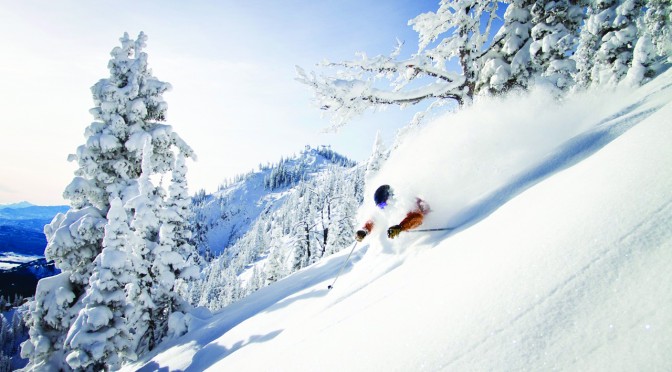
From many a window on campus, no matter what direction you’re facing, you’ll be staring directly at a snow-capped mountain range. Seven are visible from the Gallatin Valley, and during the school year, they’re more than just snow-capped—they’re snow-covered.

Whether you’re getting in a run or two at Bridger Bowl between classes, splurging on a weekend at Big Sky Resort with the family, or busting out skate-skiing laps on Lindley Park, if you ski, you’ve come to the right place. If you don’t ski, you will soon. Bozeman is centrally located for the winter-sports enthusiast; but before you hit the slopes, get the information you need to maximize your stoke.

Skiing with a view.

Skiing with a view.

Essential Gear

If you’re skiing at the resort, you’ll need all the basics: skis, boots, poles, helmet, outerwear, and accessories. If you’re starting from scratch, hit up the second-hand stores like Second Wind and Nu2u, especially for big-ticket items such as skis, poles, and outerwear. If you’re going to splurge on one item, make it your boots. Used boots are fine for beginners, but the right fit is key once you’re aggressively skiing more technical terrain. Also, buy a new helmet—lice are gross. All of the same advice applies to snowboarders, although you won’t need poles for resort riding.

For the backcountry enthusiast, gear is a bit more complicated. The first thing you should buy is an avalanche course. There are a few fully certified guide operations nearby, such as Big Sky Backcountry Adventures at the Bell Lake Yurt and Beartooth Powder Guides in Cooke City. Courses are pricey, but your life is worth a couple hundred bucks. Once you’ve booked a course, you’ll need safety gear like a shovel, beacon, and probe. (This safety gear is also required for Bridger Bowl’s more technical Ridge terrain, so you’ll most likely be purchasing it regardless.) This safety gear goes in a pack, so you’ll need one of those as well. For day tours, something between 25-35 liters will do.

Beacon search practice during an avalanche safety course.

Beacon search practice during an avalanche safety course.

To get uphill, you’ll need some skins, touring boots or boots with a walk mode (unless you snowboard), and some AT bindings. Snowboarders should check out the splitboard-binding company Spark R&D. They’re the best in the business and their headquarters is right here in Bozeman. For skiers, if you get tech bindings, make sure your boots are compatible. If all this has confused you, go to a shop and talk through your options with a sales associate. Because you’ll be traveling uphill in varying terrain, adjustable poles are nice, though not required.

If Nordic skiing is your thing, you’re lucky—there’s less gear and it’s much cheaper. To get started, you just need skis, boots, and poles. Again, buying used skis and poles is a great way to save a lot of money. Better yet, rent equipment from somewhere like Chalet Sports or Round House, then buy once you know the style of skiing you like. For classic skiing, softshell outerwear works great. Use what you have before buying activity-specific items. For skate-skiing, you’ll want something that breathes well as you’ll be sweating up a storm. Racers wear spandex, but that’s overkill for the recreational skier.

Remember that all these items and more are available for rent at the MSU Outdoor Rec Center, for great prices.

Mile Creek

Cross country skiing Mile Creek.

Where to Go

For downhill skiers and snowboarders, the obvious choice is Bridger Bowl. It’s 20 minutes from campus, meaning you can get in a half-day between morning econ and your afternoon physics lab. They also have a great rate for students, and it’s a good place to land a part-time job. That way you can ski for free.

If you’re feeling the need for some serious big-mountain skiing, pick a weekend or two and splurge on Big Sky passes. They’re expensive, but the amount and quality of the terrain is worth the price of admission. Save a few bucks on gas by taking the bus, and pack a lunch instead of gorging at the resort.

For a completely different experience, hit the road and make your way to any of the small-town ski areas within a few hours of campus. Red Lodge, Maverick, Lost Trail, and Discovery are some of our favorites, but there are several others that are worth a visit. Most are closed Monday through Wednesday, so watch the weather and head out after an early-week storm.

Making the most of Bridger Bowl's closing day.

Making the most of Bridger Bowl’s closing day.

Outside the Treasure State, other options abound. Grand Targhee is about three hours away and gets hammered with snow, and about four hours away is the legendary Jackson Hole.

If you cross-country ski, Bozeman has more options than you’ll be able to cover in four winters (or seven, as the case may be). Right in town, there are the hospital trails, groomed by the Bridger Ski Foundation and perfect for a lunch-lap or three. Out Bridger Canyon, check out CrossCut Ranch. This Nordic center has trails for all skill levels and even features biathlon. More on the wild side, the trail network in Hyalite is periodically groomed and nestled deep in the Custer-Gallatin National Forest.

Backcountry enthusiasts can cut their teeth in Bradley’s Meadow on the north boundary of Bridger Bowl. It’s a short skin from the ski area’s Alpine chair and offers a few safe, mellow turns. Up Hyalite, History Rock and Lick Creek are local favorites, and if conditions are right, Mt. Ellis is another close-by standby. Obviously, the options are endless, but we can’t do all the work for you. Go explore—safely.

Cross country skiing, Lone Mountain Ranch, Big Sky, Yellowstone Country

Cross country skiing

 Events

As students, your schedules are jam-packed, but that doesn’t mean you shouldn’t make some time for fun. Skiing is inherently social, and the following events are the highlights of the season.

Bridger Bowl hosts weekly community events, ranging from freeride competitions to telemark costume races. Check out their event calendar once the season starts for more details. Big Sky also hosts daily events, most notably excellent live music and several bigger festivals. Big Sky Big Grass is a highlight every February, as is the Pond Skim in April.

November 26
Big Sky Opening Day – Big Sky. Give thanks for overhead pow turns and steep terrain at Big Sky’s opening day. Services will be limited, but this is a great way to get the season started. Details here.

December 4
Projected Opening Day – Bridger Bowl. Chairs start spinning for another season at Bridger Bowl. Get your place in line, even if it means procrastinating during finals week. Details here.

For an up-to-date list of events around the Bozone, check out Outside Bozeman’s event calendar.

Winter Watch-Outs

by Jack Taylor

Winter in Montana is magical. Our landscape takes on a beautiful frozen stillness that beckons us to venture out among frosty firs, blanketed meadows, and frozen waterfalls. Even as temperatures plunge below zero, we catch glimpses of wildlife adapted to survive in the snowglobe. But as humans, we’re not so adept at enduring the cold. We depend on warm clothing, heating, and shelter to make it through. The margin for error in the outdoors is thinner during winter, and a mishap can quickly turn dangerous if you’re not prepared.

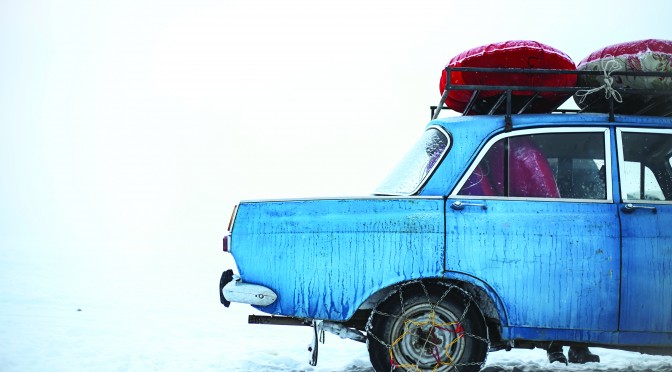
Before you take on the snowy roads, make sure your vehicle is capable. Snow tires are highly recommended and will make your life easier—and safer—all winter long. Yes, it’s a big investment, but with two sets of tires for summer and winter, each will last twice as long. If you must go without, a set of chains in your car will get you out of a pickle. Make sure they fit your tires, and practice installing them so that you can do it quickly when the time comes. If you have a front- or four-wheel drive car, put them on the front tires; if rear-wheel, put them on the back. A few more items to keep in your car include a shovel for digging yourself out, jumper cables in case your battery dies, and gloves plus warm jackets (or even a sleeping bag) in case you get stuck for a long time.

Extra warm layers are also essential when venturing away from your vehicle. A good rule of thumb is to bring one layer more than you think you’ll need—better safe than sorry. When planning your layering scheme, start with a moisture-wicking baselayer made of synthetic fibers or wool. Never wear cotton for warmth in winter; if it gets wet, it won’t dry out until you’re back in a warm environment. Fleece makes a great midlayer for top and bottom, and the same rule applies for materials. A waterproof shell usually isn’t necessary given the dryness of our winters, but a windbreaker will add protection without taking up much space in your pack. On top of that, an insulated jacket with synthetic or down fill gives you lots of warmth with little extra weight to carry. Down has a better warmth-to-weight ratio, but like cotton, it will not dry in the cold, so synthetic is always a safer bet.