Category Archives: Preparation

Balanced Learning

by Thomas Austin

Finding the sweet spot between pain and gain.

Before I moved to Bozeman, I thought I had a solid foundation in most of the area’s popular outdoor sports. In high school I skied a handful of days each season, mountain biked occasionally, had a few trail runs under my belt, and backpacked at least once a year. But once I moved and started making more outdoorsy friends, I realized I was still a novice at all these activities. Sure, I could hold my own on a trout stream, but rock walls, dirt trails, and ski slopes were another story.

Keeping up with the cadre of crushers I kept as friends required quick learning. No matter the activity—mountain biking, whitewater paddling, or backcountry skiing—I relied on the same simple process. I’d spend as much time as possible practicing, and I jumped at every opportunity to leave my comfort zone. In time, I discovered that a balance between the two—getting reps at the upper threshold of one’s ability and also participating in nerve-shattering group outings—was the best method for dramatically improving performance.

The most effective way to develop any skill is to learn from those more skilled than oneself, and the best mentors are folks who’ve put in countless hours mastering their craft and have developed a vast repertoire of knowledge they’re willing to share.

Stepping out of our comfort zone forces us to expand the scope of terrain that we’re comfortable in and push the boundaries of our ability.

If you’re looking to get into an activity, find a knowledgeable friend and ask to tag along on an outings. Study what she does, how she does it, and try to replicate it. Ask every question that comes to mind, and don’t settle for answers you don’t understand. Take this time to identify what you need help with the most.

Input from a knowledgeable peer can make the difference between fruitless struggle and rapid improvement. We’re all capable of more than we think, and sometimes we just need a hard-charging friend to push us further than we thought possible. Stepping out of our comfort zone forces us to expand the scope of terrain that we’re comfortable in and push the boundaries of our ability.

That said, it’s frustrating as hell to always being the weak link. Spending all your time trying to keep up isn’t fun, and practicing solo—without the fear of slowing down the group or looking like a noob—provides the opportunity to relax and go at your own pace. Recreating on manageable terrain allows you to hone your technique and try new things. You’ll struggle at first, but if you stick with it, you’ll soon familiarize yourself with your strengths and weaknesses, develop your own style, and gain confidence in your approach. Breakthroughs in performance are the result of countless hours of practice.

As a beginner, it’s tempting to be overly critical, but negativity can create frustration. Being great right away isn’t normal, and progress wouldn’t be rewarding if it were. Good things take time.

Remember to acknowledge the limitations of your abilities even as your skills sharpen. Understanding your comfort zone is critical. Even if your ultimate goal is rapid improvement, carve out some time to take it slow. Eventually you’ll find the balance that works for you. For me, an even split between pushing myself and taking it easy yields the best results.

Lastly, make sure to keep your inner dialogue positive. As a beginner, it’s tempting to be overly critical, but negativity can create frustration. Being great right away isn’t normal, and progress wouldn’t be rewarding if it were. Good things take time. Embrace your mistakes, pick yourself up when you fall, remind yourself why you started in the first place, and remember that improvement requires pushing the envelope.

Finally, take comfort in knowing that learning never ends. There’s always room for improvement, and that’s the best part. The reward lies in the pursuit of perfection, not the realization of it. If you buy in and embrace the grind, your efforts will be rewarded. Take your time and strive for greatness. Who knows, maybe one day you’ll be the one mentoring the next generation of mountain phenoms.

Talk the Talk

Learning the lingo of your new outdoor hobby.

Picking up a new activity is hard enough, and trying to figure out what your more advanced counterparts are talking about doesn’t make it any easier. With so much hyper-specific lingo—much of which is not intuitive—understanding what the hell your mentors are saying can be half the battle. Thankfully, we’ve compiled some of the most common jargon you’re likely to hear, from the river’s edge to the ridge and everywhere in between. So read on, and maybe someday you’ll be able to not just walk the walk, but talk the talk.

BIKING

Tacky / Hero Dirt / Brown Pow
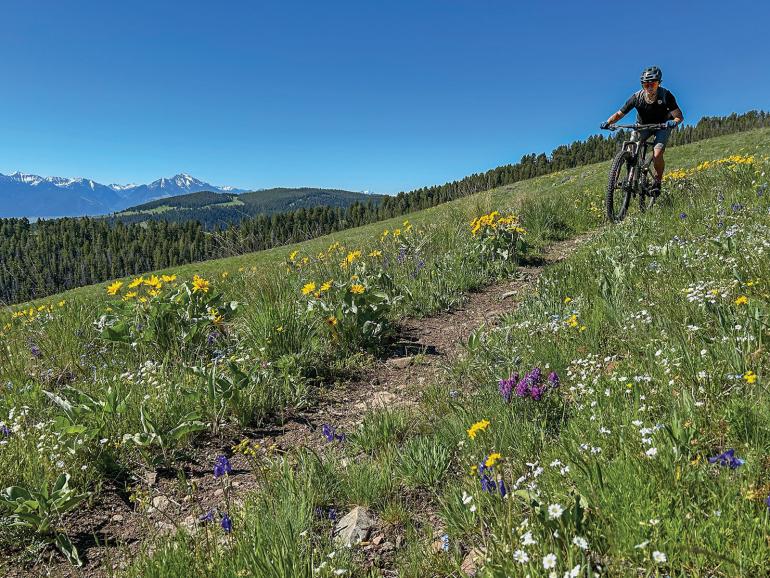
Dirt that is mostly smooth, mostly rock-free, and has just enough moisture to hold your tires like glue. The ideal trail condition.

Clipless
Pedals that lock your shoes in place while you bike. Confusing, we know.

OTB (Over the Bars)
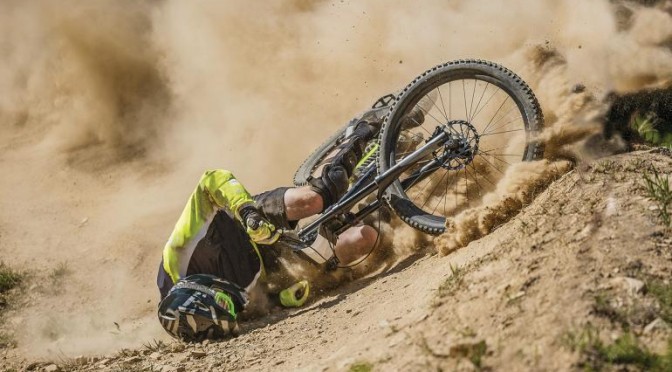
An unplanned dismount resulting from an abrupt change in speed which catapults you over your handlebars.

Technical
Steep, difficult trails with rocks, roots, and tight turns that demand precise movement and control. Often abbreviated by biker bros as simply “tech.”

Flow
Smooth, sculpted trails built for speed with berms, rollers, and jumps.

Rooster Tail
The spray of dirt or dust kicked up by your rear tire as you accelerate through a corner or berm. Cool kids truncate this metaphor to “roost.”

—Adam Brown

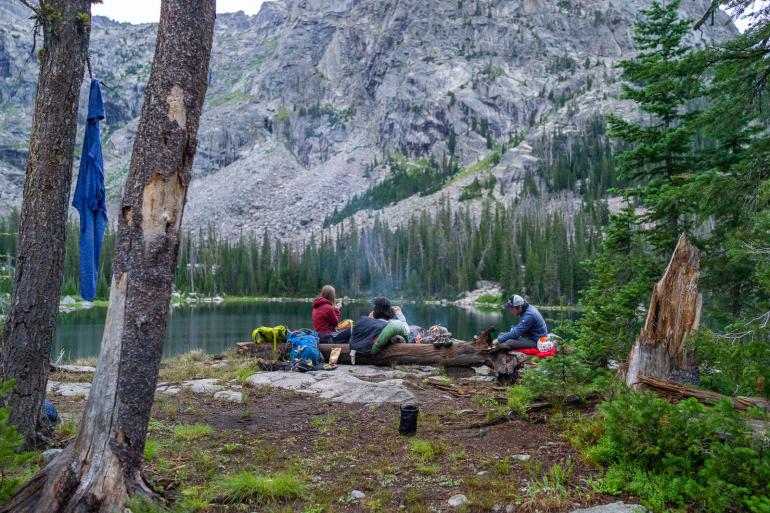
Elbow Lake Camping
CAMPING

Camp Spice
Flavor acquired by dirt and other natural objects getting into your camp food. “Don’t worry about it, dude. It’s just a bit of camp spice.”

Base Weight
The minimum cumulative weight of one’s packed backpack and gear without accounting for food & water.

Cowboy Camping
Sleeping out under the stars without a tent, tarp, or overhead structure.

Camel-Up
Drinking extra while at a water source to reduce the risk of possible dehydration later.

Freestanding
A tent whose structure relies on tent poles included with the tent

Non-Freestanding
A tent whose structure relies on other objects—such as trekking poles or sticks—not included with the tent.

Dirty Dinner
The first meal one consumes after returning from a trip to the backcountry; typically a gut-buster.

—Megan Gorsky

CLIMBING

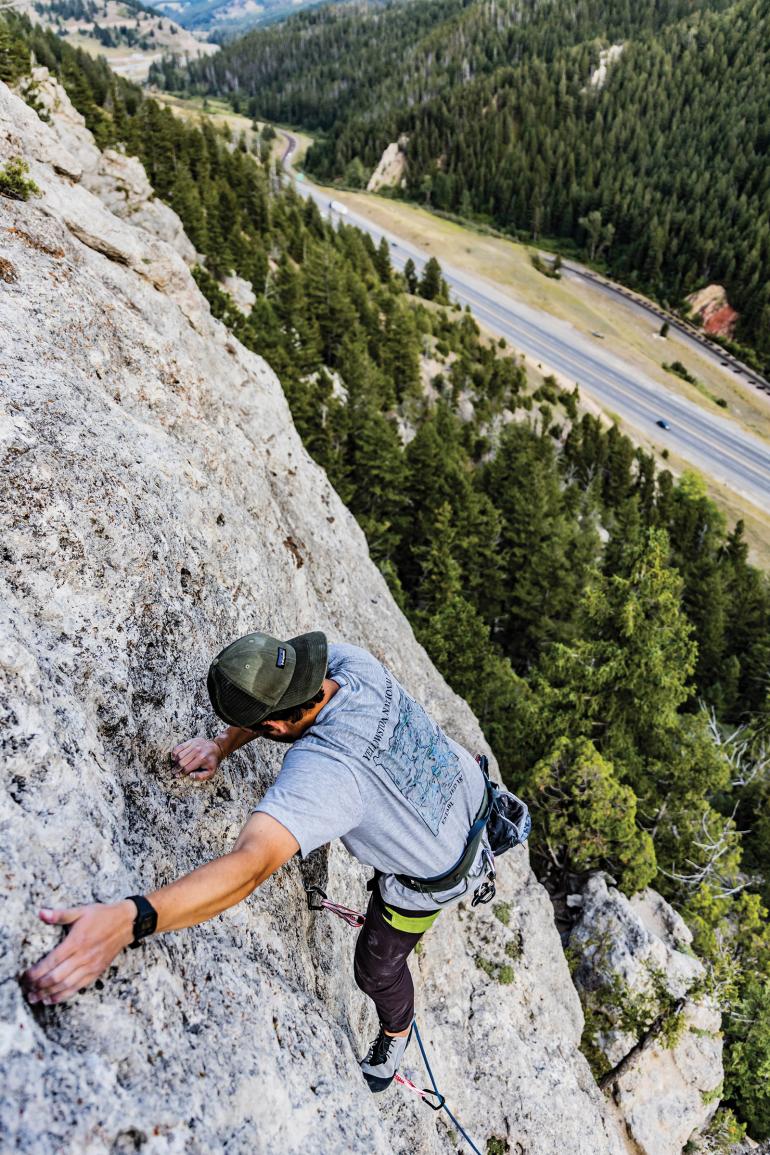
Beta Spraying
Sharing the sequence of moves, tips, or tricks for a climb without being prompted to. An impressively annoying faux pas.

Protection
Gear—including cams, nuts, and quickdraws—climbers place to catch falls. Often shortened to just “pro.”

Runout
A long stretch between pieces of protection. Falling here comes with consequences.

Yarding
Grabbing the rope, gear, or quickdraws to haul yourself upward instead of climbing clean.

Pumped
When your forearms fill with lactic acid from exertion and your grip strength plummets—often the consequence of squeezing holds harder than necessary.

Flapper
A flap of skin forcibly removed from your fingertip or palm by the rock face.

Bail biner
The sacrificial carabiner you leave behind when you can’t finish a climb.

—Fischer Genau

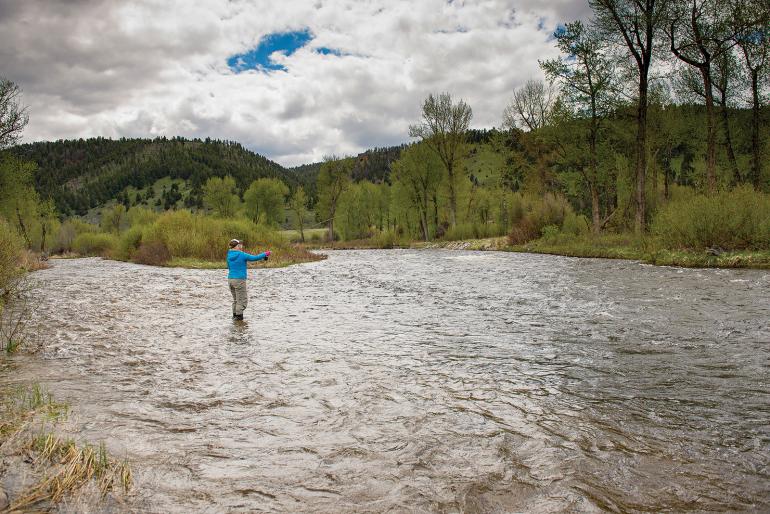
Fishing rock creek
FISHING

Honey Hole / Honey Bucket
A particularly productive section of water that reliably holds good-sized fish.

High- or Low-Holed
When another angler cuts in close and begins fishing the water you were working toward; high-holed for upstream and low-holed for downstream. Widely considered one of the worst offenses in fishing etiquette.

Hog, Pig, Toad, Lunker, Slab
A fish that’s notably larger than average for the species.

Skunked
A day fishing with nothing to show for it. Often accompanied by excuses about weather, water levels, etc.

LDR (Long-Distance Release)
When a hooked fish throws the hook or comes unbuttoned before being brought to hand. Sometimes celebrated as “intentional catch-and-release from afar.”

—Adam Brown

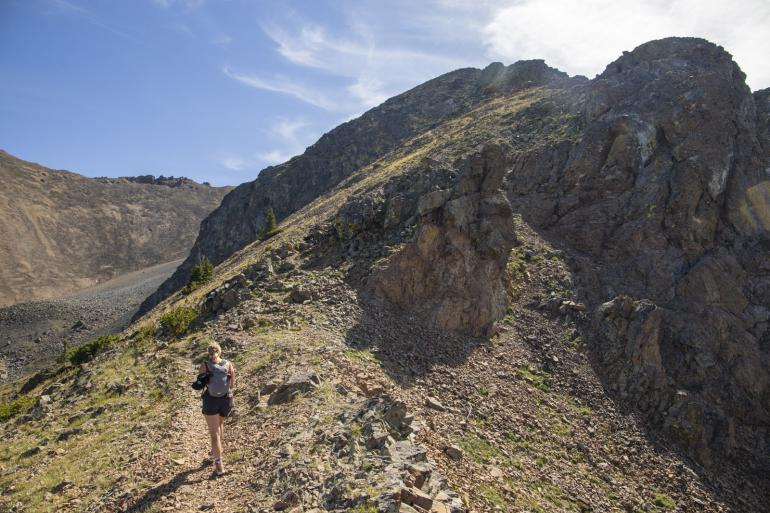
Emigrant Peak
HIKING

Type 1 Fun
An excursion that is fun while you’re doing it.

Type 2 Fun
An excursion that stinks, but is fun to reminisce on afterwards.

Bonk
To hit the physical wall from over-exertion or lack of calories.

Cairn
A small stack of rocks delineating the trail. Don’t build new ones; it mars the landscape and can mislead future hikers.

Trail Magic
Unexpected acts of kindness, generosity, or good fortune on the trail; i.e., just as you were about to give up and turn around, a stranger appears, providing snacks, encouragement, and guidance.

Hiker Funk
The potent, unmistakable odor that clings to hikers after a long outing. A combination of sweat, sunscreen, moldy socks, and body odor.

—Adam Brown

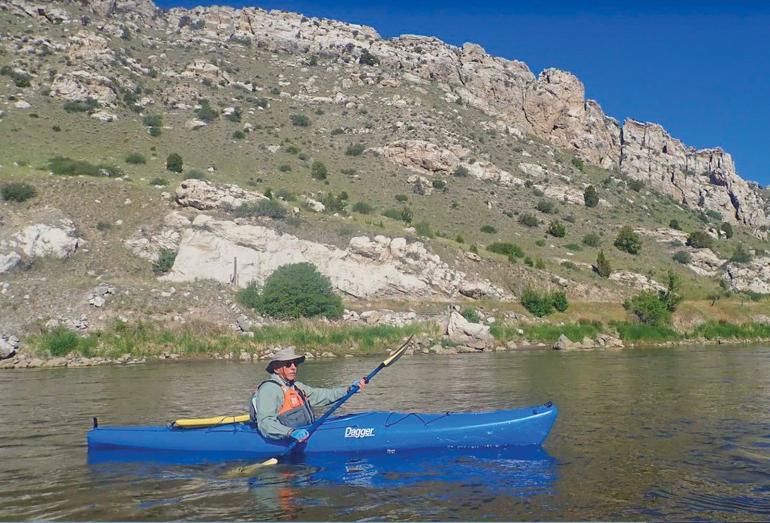
Kayak touring Montana
PADDLING

Eddy
Pools of still water near the banks of a river caused by the current backfilling negative space behind rocks or other obstructions into the river.

Tongue
The smooth, fast water in the middle of a wave—the best place to be. Everybody loves a tongue ride.

Rig to Flip
To rig your gear in such a way that it remains secure even if you flip. Often used in conjunction with “Let’s get rowdy.”

Bootie Beer
A punishment for kayakers who were unable to roll their boat and are subsequently made to drink a beer from their river shoe—a.k.a. bootie.

Maytagged
The generally horrifying experience of being recirculated underwater, akin to being stuck in a washing machine’s spin cycle.

—Carson Sprague

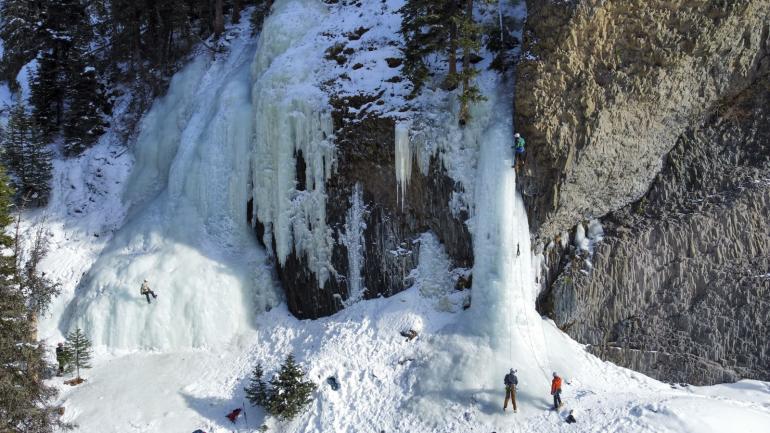
Ice Climbing Hyalite
ICE CLIMBING

Ice Tools
Curved axes designed for climbing ice. Different than mountaineering axes, which are made for climbing snow.

Frontpoints
The often-serrated tips of your crampons that grip the ice as you kick.

Screamin’ Barfies
The painful sensation of blood rushing back into the fingers after climbing a cold, strenuous pitch—often accompanied by dry-heaving or vomiting.

V-Thread
A type of anchor built by drilling two intersecting holes in the ice with ice screws, which a rope can be threaded through.

Dinner Plates
Scary, delaminating ice that typically forms on convex bulges or where ice is intermixed with snow.

Hero Ice
Perfect, sticky blue ice that is easy to swing into and holds your tools solidly. This is what it’s all about!

—Jack Taylor

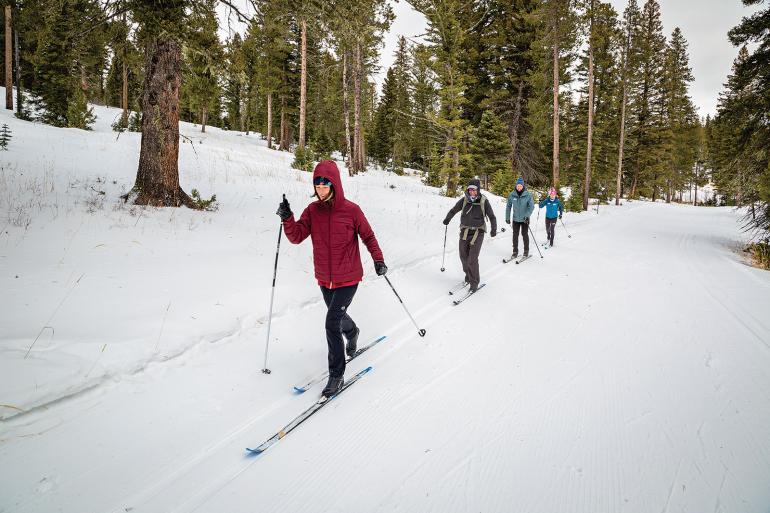
Crosscut nordic clinic singletrack skiing
NORDIC SKIING

Cross-Country
A blanket term encompassing general touring, skate skiing, and metal-edge touring. Also known as Nordic skiing.

Classic Technique
A traditional cross-country skiing style where opposite arm and leg move together. Also known as kick & glide or diagonal stride.

Scales
The fish-scale-like pattern on the bottom of a traditional cross-country ski, providing traction for the kick portion of the aforementioned kick & glide.

Skate Skiing
A technique where the skier keeps the tips of the skis apart and pushes off side-to-side, mimicking ice skating.

Groomed Trail
Trails smoothed and maintained by machines, often found at Nordic ski resorts but also on public trails and golf courses.

Basket
A plastic disk near the end of a ski pole that prevents it from sinking into snow, allowing the skier to push off.

—Leah Veress

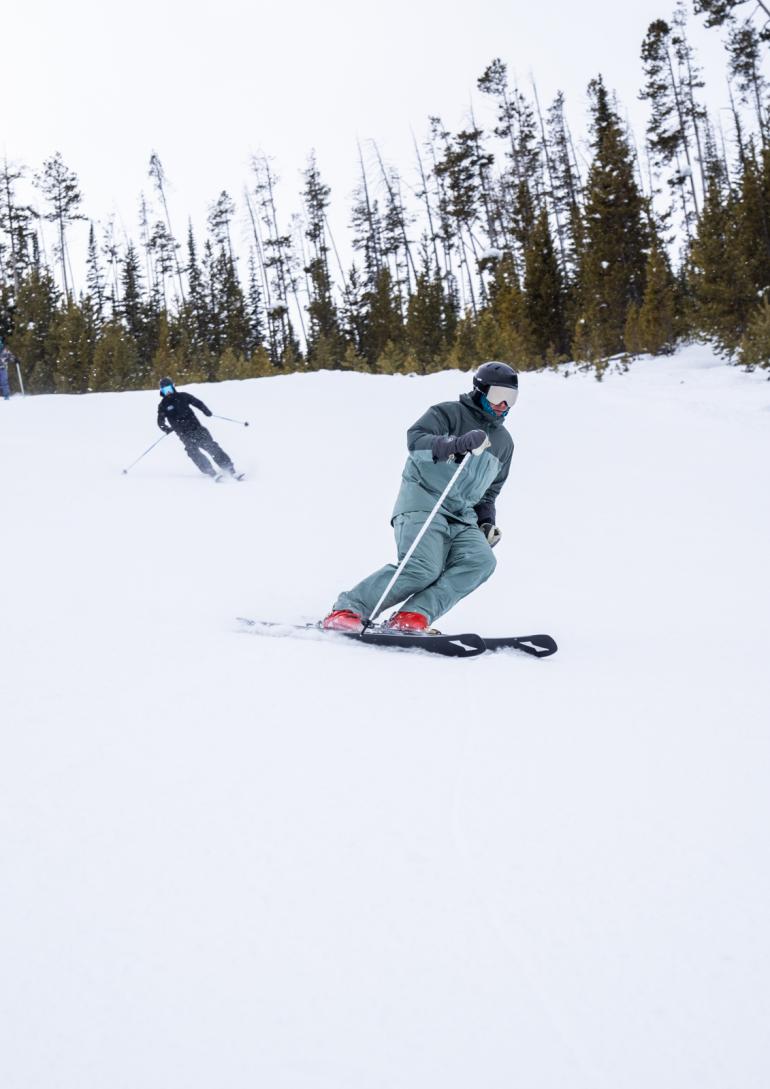
Skiing Bode Miller
SKIING

Après Ski
French for “after ski,” though a more realistic translation would be “after party.”

Tomahawk
A crash that sends you ass-over-teakettle over and over, as though you were a spinning tomahawk.

Bluebird
When the sun is shining, the sky is clear, and the visibility is unlimited. It’s bluebird, baby.

Yard Sale
A wreck that scatters your gear across the slope, making it appear as though you’re having an impromptu yard sale.

Face Shot
When the powder’s so deep that your turns kick snow up into your face. An unbeatable, inimitable feeling.

Jerry/Gaper
An unexperienced, novice skier who’s generally oblivious to the codes of the mountain. Named for the unmistakable gap between the brim of the helmet and the top of the goggles.

—Carson Sprague

Try Before You Buy

by Jack Taylor

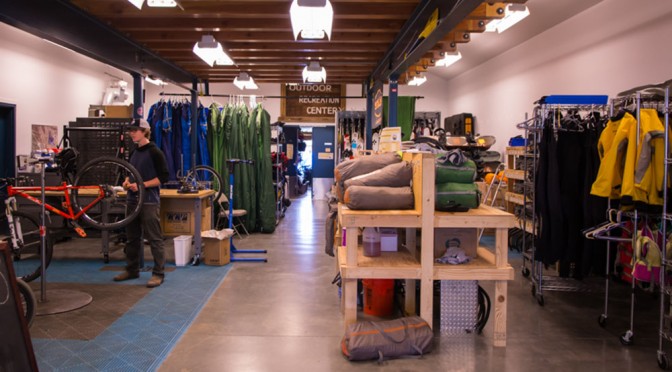
With so many activities to try around the Bozone, it’s hard to get fully outfitted for everything. Not to worry—there are plenty of stores in town (and in our surrounding towns) that can set you up with rental gear. This way, you can see if the activity is worth investing in, or try out a specific piece of equipment, before committing to a purchase. Sometimes, you can even apply the cost of the rental toward a purchase from the same store.

Want to try mountain biking? Check out Chalet SportsRound HouseOwenhouse Cycling, or Arc’s Bike & Ski. In Livingston, Dan Bailey’s also rents bikes.

Heading for the river? Round House rents watercraft, as do Northern Lights and Big Boys Toys. Dan Bailey’s, Montana Troutfitters, and River’s Edge can set you up with fishing gear.

If you’re seeking a high-octane outing, Big Boys Toys rents ATVs and UTVs; or try Yellowstone Adventures down in West Yellowstone. Both of these outfitters also rent snowmobiles in winter.

Speaking of winter, of course we’ve got plenty of options for ski rentals. Bridger Bowl has its own rental shop, and Round House has a satellite shop on the mountain. Dan Bailey’s and Uphill Pursuits have top-of-the-line backcountry-skiing equipment if you want to venture beyond the resort. Chalet Sports and Round House stock the full gamut, from basic rentals to high-end demo skis—the latter you can also find at Ph.D. Skis.

Most of the aforementioned ski shops rent Nordic skis, too. You can also get set up at Lone Mountain Ranch in Big Sky or Freeheel & Wheel in West Yellowstone.

If you want to get your feet wet (read: cold) with ice climbing, Montana Alpine Guides can set you up with ice tools, boots, and crampons.

Though not outdoor equipment per se, for some, camera gear is an essential part of the kit. Bozeman Camera rents professional-grade cameras and lenses at friendly prices, plus it offers a 20% discount for students and military. It also has an extensive inventory of used equipment, when you’re ready to make a purchase.

No matter what new activity you want to try, Bozeman has it all. The beauty of renting is you can hang it up after one go, or dive down the rabbit-hole of a new hobby—we can’t say it hasn’t happened before. Get out there, be safe, and have fun.

Winter Watch-Outs

By Jack Taylor

A little prep goes a long way.

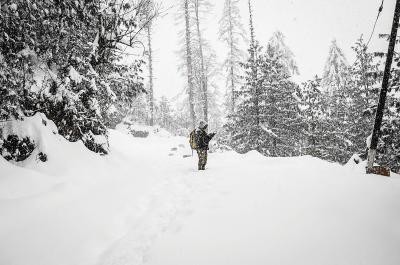
Winter in Montana is magical. Our landscape takes on a beautiful frozen stillness that beckons us to venture out among frosty firs, blanketed meadows, and frozen waterfalls. Even as temperatures plunge below zero, we catch glimpses of wildlife adapted to survive in the snowglobe. But as humans, we’re not so adept at enduring the cold. We depend on warm clothing, heating, and shelter to make it through. The margin for error in the outdoors is thinner during winter, and a mishap can quickly turn dangerous if you’re not prepared.

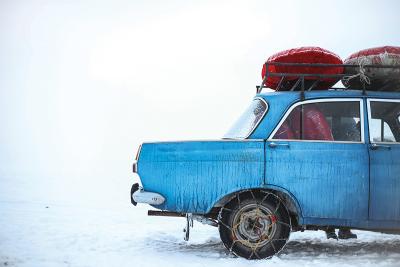
Before you take on the snowy roads, make sure your vehicle is capable. Snow tires are highly recommended and will make your life easier—and safer—all winter long. Yes, it’s a big investment, but with two sets of tires for summer and winter, each will last twice as long. If you must go without, a set of chains in your car will get you out of a pickle. Make sure they fit your tires, and practice installing them so that you can do it quickly when the time comes. If you have a front- or four-wheel drive car, put them on the front tires; if rear-wheel, put them on the back. A few more items to keep in your car include a shovel for digging yourself out, jumper cables in case your battery dies, and gloves plus warm jackets (or even a sleeping bag) in case you get stuck for a long time.

TireChains-OzielGomez-unsplash_LR

Extra warm layers are also essential when venturing away from your vehicle. A good rule of thumb is to bring one layer more than you think you’ll need—better safe than sorry. When planning your layering scheme, start with a moisture-wicking baselayer made of synthetic fibers or wool. Never wear cotton for warmth in winter; if it gets wet, it won’t dry out until you’re back in a warm environment. Fleece makes a great midlayer for top and bottom, and the same rule applies for materials. A waterproof shell usually isn’t necessary given the dryness of our winters, but a windbreaker will add protection without taking up much space in your pack. On top of that, an insulated jacket with synthetic or down fill gives you lots of warmth with little extra weight to carry. Down has a better warmth-to-weight ratio, but like cotton, it will not dry in the cold, so synthetic is always a safer bet.

Camp Chef

CampCooking-WindRiverRange-JackTaylor-1by Jack Taylor

Cooking in the backcountry.

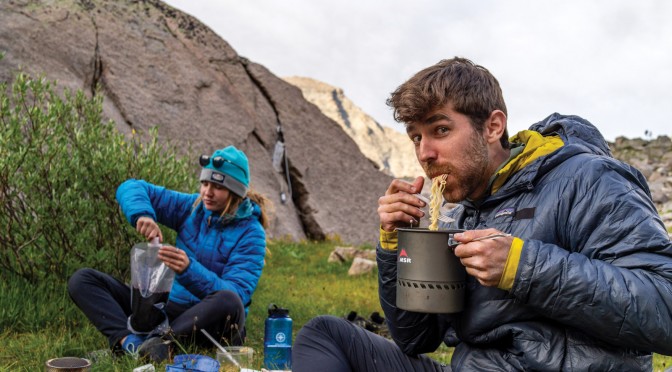
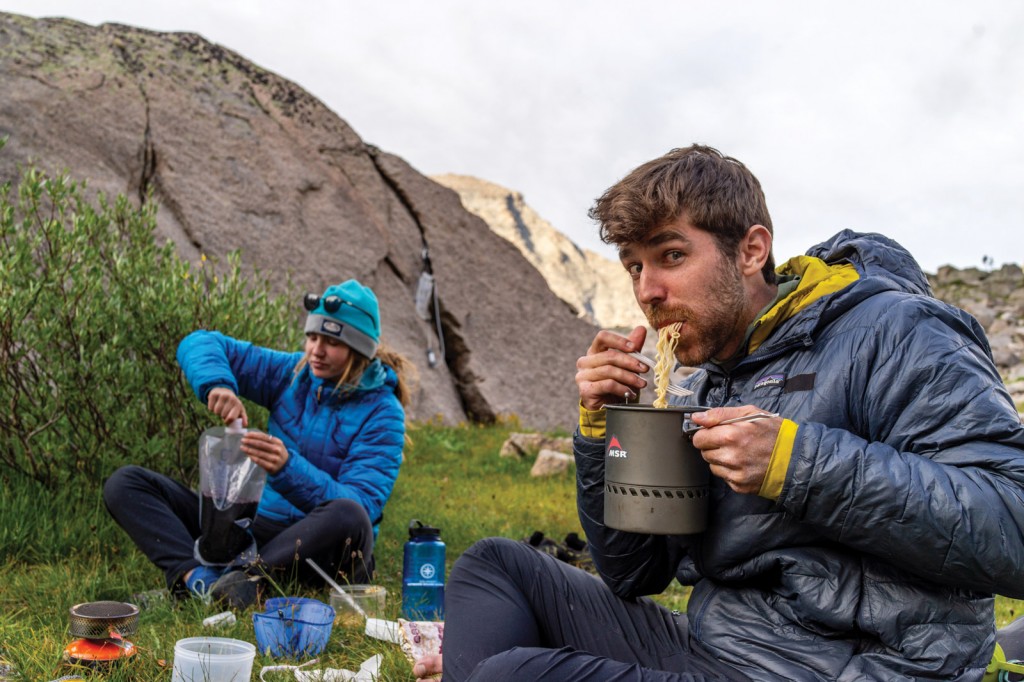
Cooking can be one of the most stressful aspects of camping for beginners, and one of the most joyful for veterans. Eating good food will not only keep you energized during your trip, but will also boost your morale. There’s nothing as sweet as kicking your feet up with a hot, tasty meal and watching the sunset from camp after a hard day of playing out in the backcountry. Here’s a rundown on how to crush camp cooking.

Stoves
There are three types of camp stoves to choose from: butane, propane, and white gas. Butane stoves are light and simple, but are less versatile and don’t do well in cold temps. Propane stoves are powerful, versatile, and great for car or river camping, but they’re too heavy for backpacking. White gas stoves are versatile and light, but they’re slightly more complicated to operate and maintain. Choose the right stove for your application.

Fire
Cooking on an open fire is one of the great pleasures of camp cooking. Get the fire started well beforehand to ensure you’ve got some nice hot coals to work with. Move the coals around to adjust heat. You can cook with a grill-grate, cast-iron pan, or Dutch oven. Looking for something lighter? The Fry-Bake Expedition Pan is aluminum and rated by the manufacturer for open-fire cooking. It’s expensive, but it’s the best lightweight pan you can buy.

Cook Kit
Keep your cook kit simple. A frying pan and one pot with a lid should suffice—size depends on how many you’re cooking for. Get a small metal spatula and a pair of pliers to grip your cookware. Bring a small, sharp knife and small cutting board. Opinel has some great utensils, and Gerber makes excellent bowls and plates for serving food. If you like coffee, GSI offers a light, reusable pour-over device. Don’t forget your mug!

Spice Kit
If you want to cook great food in the backcountry, you need to add some flavor. A small assortment of seasonings and spices goes a long way. MSR makes a compact salt-and-pepper container that’s great for other spices, too—keep a few in a small stuff sack. Take whatever spices you like, but never go without salt and oil. Chicken bouillon powder and hot sauce are also kick-ass. Experiment with dry sauce packets such as instant gravy, alfredo sauce, and chili mix.

SethDailey-EggsBacon

Produce
Even without a method of refrigeration, you can still bring some produce on your camping trip. Raw meat and leafy greens can go unrefrigerated for the better part of a day. Most veggies will last for at least a few days, while hardy fruits and veggies such as oranges, apples, potatoes, onions, and carrots are good for a week or more. Summer sausage, cheese, and butter will also last over a week, provided you keep it sealed and cool.

Dry Goods
Whether you’re backpacking, river camping, or car camping, you’ll want the majority of your food to be dry and non-perishable. Rice and pasta are obvious staples, which can be spun into an immense variety of meals by adding other ingredients. Dried fruits and nuts are great for snacking, and can be added to breakfasts such as oatmeal or granola for some extra flair (add powdered milk for more flavor and calories). If you have a dehydrator, you can make DIY dehydrated foods—canned chicken or beans, mushrooms, frozen peas or corn, and zucchini all rehydrate well.

Baking
Backcountry baking? You betcha. If you want to take camp cooking to the next level, baking is where it’s at. You can use baking powder to leaven pancakes, biscuits, scones, and muffins. If you want to get real fancy, use instant yeast to leaven bread, pizza, or cinnamon rolls.

Recipes
One of the most fun parts of camp cooking is coming up with your own recipes. Put veggies and seasonings into rice or couscous to make a pilaf. Fry some potatoes, then load up the skillet with meat and cheese for a hearty breakfast scramble. Cook pasta, then layer it with sauce and cheese to make a casserole. The sky’s the limit!

Go Easy

by Jack Taylor

It doesn’t take a whole garage full of gear to make the most of southwest Montana’s outdoors. In fact, some of our favorite activities and outings require little to no specialized equipment whatsoever. So if you’re tight on cash, or just want to keep it simple, here are some ideas.

State Parks
Many of Montana’s state parks serve as one-stop destinations for recreation, camping, and culture. They’re usually located at historic sites, and most have visitor centers where you can learn about the cultural significance of the area. For example, see how the natives hunted bison at Madison Buffalo Jump, take a subterranean stroll at Lewis & Clark Caverns, or explore the lush floodplains of Missouri Headwaters. All you need is a good pair of walking shoes.

Swimming Holes
Especially in the heat of summer (or other times of year for the masochistic), taking a cool dip is a great way to immerse in the outdoors. There are rivers and streams all over the place around here, plus a healthy handful of lakes and ponds, and finding your favorite swimming hole is a fun adventure—so we won’t spoil the goods. But some of the most popular places to swim near town are Glen Lake Rotary Park (a.k.a., Bozeman Beach) and Hyalite Reservoir.

Tube Floats
Speaking of water, you don’t need to invest hundreds or thousands in a watercraft to go for a float. In fact, when the weather is warm, hordes of Bozemanites will take to lazy stretches of river aboard cheap inflatable inner-tubes to relax and soak up the sun. The lower Madison River from Warm Springs to Black’s Ford is by far the most popular destination for this type of float; in other words, if you want any inkling of solitude, go elsewhere.

Dirt Roads
There are hundreds of miles of Forest Service roads in the mountains of the Custer-Gallatin National Forest, and hundreds more miles of ranch-access roads out in the plains. Some of them may require a high-clearance, four-wheel-drive vehicle, but many will accommodate any ol’ sedan just fine. Take a drive and see what you find. Moser CreekLittle Bear Canyon, and Springhill are good places to start.

Town Trails
Thanks to conservation easements maintained by the Gallatin Valley Land Trust (GVLT), you don’t even need to leave the Bozeman city limits to explore the out-of-doors. There are nearly 100 miles of trail in the Main Street to the Mountainstrail system that will take you back and forth across town, and even plug you into Forest Service trails in the Bridger and Gallatin ranges. So lace up your shoes and hit the dirt—there’s nothing holding you back.

Plein Air
Artistic talent be damned—grab some watercolors, colored pencils, oil pastels… whatever suits your fancy, and post up with a canvas or sheet of paper outside. You don’t need to be the next Monet to appreciate the experience of creating outdoor art. It’ll surely help you notice previously unforeseen details in your surrounding landscape, and who knows—maybe you’ll get hooked on a new hobby.

Prepped for Anything

by Jamie Rankin

Southwest Montana offers outdoor pursuits of all difficulty levels—and some that walk a fine line between risk and reward. But regardless of the challenge and level of expertise (or lack thereof), accidents happen. Every outdoor-goer should have knowledge on how to optimize safety, and how to handle an unexpected turn for the worse. Here’s a rundown on some courses we recommend for safety, survival, and for growing your outdoor skillset.

Wilderness First Aid
No medical experience? No problem. Wilderness First Aid (WFA) preps students on basic medical practices in an outdoor setting. From assessing a patient to improvising splints with outdoor gear, this course will prepare you to stabilize a situation until a trained medical professional can step in. There are many local course providers; a web search should lead you to a course that fits your schedule. For students, check out MSU’s outdoor-activity classes.

Wilderness First Responder
If you’ve mastered the basics and want more medical preparation, take a Wilderness First Responder (WFR) course. These 80-hour courses are a mix of classroom time and accident scenarios; they teach students the skills needed stabilize a patient for an extended period of time. The same organizations that offer WFAs typically teach WFR courses as well.

Belay Certification
If you want to get into climbing but aren’t sure where to begin, Spire Climbing Center is a great place to start. As a member, you get access to beginner- and intermediate-level climbing instruction; including auto-belay, standard belay, and more. Already know the basics? Spire has an assortment of classes and clinics for intermediate and advanced climbers, too. 

Green University
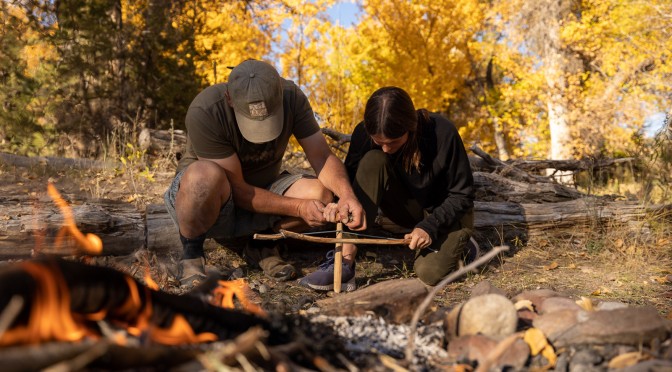
Botanist and outdoorsman Thomas Elpel holds workshops, classes, and events focused on wilderness survival skills and sustainable living. From fire-starting, deer processing, and foraging to making buckskin clothing, Elpel will teach you how to be confident and self-sufficient in the woods.

Avalanche Courses
When venturing into the backcountry in winter, avalanche danger is ever-present. Snow conditions can be tricky to read, so a course is critical in gaining basic competency—both in avoiding slides and rescuing fellow skiers should they be caught in one. Courses can be taken through Gallatin National Forest Avalanche Center (GNFAC), Montana Alpine Guides (MAG), MSU, Beartooth Powder Guides, and Big Sky Backcountry Guides.

Mountain-Bike Clinics
Crosscut Mountain Sports Center offers an assortment of mountain-biking clinics for all skill levels and ages, including introductory courses, skills-specific classes, and even guided rides. Developing your two-wheeled talent will not only allow you to push yourself in a safer manner, but will also make the sport more fun.

Avy Savvy

By: Jack Taylor

A rundown on snow-safety resources.

“If you want to learn about something, going to school is just one way to do it.” —Doug Chabot, director of the Gallatin National Forest Avalanche Center (GNFAC)

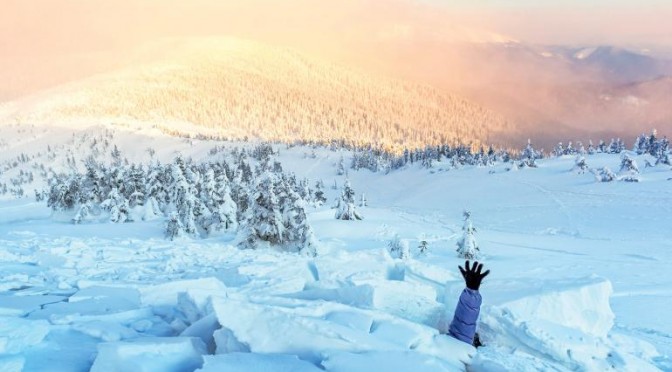
Avalanches: the big, bad monster hiding under the bed for backcountry skiers. Every year we hear about avalanche incidents and fatalities in our local area. The cold, hard truth is that death is an inherent risk when backcountry skiing.

Another truth is that avalanche education is widely available. In fact, avalanche-education events happen nearly every day throughout winter in the Bozeman area—many of them for free. Our local avalanche center puts out forecasts every day—also free. And there’s a limitless amount of information accessible on the internet—again, free.

It’s a common misconception that avalanche education is prohibitively expensive. Yes, a formal, accredited course is the gold standard. But if you can’t afford it, plenty of other options exist.

There’s no “one thing” you can do to be safe from avalanches—except for avoiding avalanche terrain altogether. Avalanche safety is an amalgamation of skills such as terrain recognition, snowpack assessment, weather observations, decision-making, leadership, and rescue. So this winter, whether you’re a first-time skier or seasoned vet, take some time to develop, enhance, or just brush up on your avy skills.

Print Resources
These publications are timeless resources, but bear in mind that experts are still learning more about avalanches every year—so pay attention to the publication date.

  • Staying Alive in Avalanche Terrain
  • Avalanche Essentials
  • Avalanche Pocket Guide
  • Snow Sense
  • Allen & Mike’s Avalanche Book
  • The Snowy Torrents
  • The Avalanche Handbook

Online Resources
The internet has made avalanche education more accessible (and more up to date) than ever. There are tons of resources to peruse: social media accounts, YouTube channels, incident archives, and so on. Here are some places to begin your search.

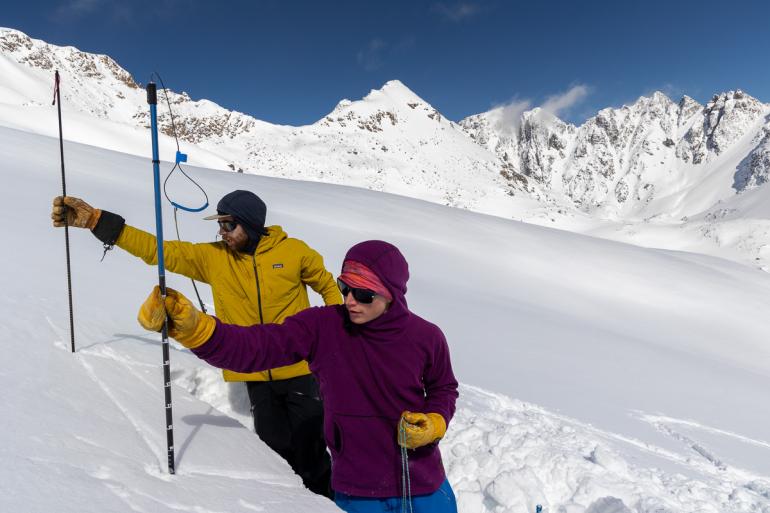
gooselakesnowpit-jacktaylor-2_lr

Training
From seminars, to organized practice sessions, to field clinics, there are free and low-cost avalanche-training events happening all the time in and around Bozeman. Check with any of the above resources, or your favorite local gear shop, for more info.

Courses
If you want to take a formal, accredited avalanche course, more power to you. These courses can be expensive, but the benefit is long-duration, hands-on instruction by professional instructors. Local course providers include:

  • Beartooth Powder Guides
  • Big Sky Backcountry Guides
  • Montana Alpine Guides
  • Montana Backcountry Yurts
  • Montana Mountaineering Association
  • MSU Outdoor Rec
  • Six Points Avalanche Education

Dos and Don’ts
A comprehensive list of avalanche-safety rules would take up this entire magazine. Here’s a cursory overview.

DO: Ask questions. Avalanche safety is all about gathering information. What safety gear do I need? How do I use it? Where can I ski that’s safe? How do I test the snowpack?
DON’T: Take every answer at face value. Instead, be investigative. Use reputable sources. Email [email protected] with any questions you have.

DO: Practice. Get to know your safety gear. Get to know the snowpack. Get to know your partners.
DON’T: Get complacent. Many accidents happen when the guard is down. Stay on your toes out there.

DO: Read, or listen to, the avalanche forecast. It’s published every morning in text and audio format. Many folks make a habit of listening to it in the car with their ski partners on the way to the trailhead.
DON’T: Hesitate to change plans. Higher wind gusts than expected last night? Dial it back. Warmer temps than expected today? Make a turnaround time. There’s always another day to ski.

Human Factors
Group dynamics and decision-making are critical components of backcountry skiing. Tomes have been written about human factors in avalanche safety. Start by looking up the F.A.C.E.T.S. acronym, which outlines common traps we fall into:

Familiarity – Feeling more comfortable in a place we’ve already been
Acceptance – Wanting to prove our worth to others
Consistency – Tending to stick with decisions we’ve already made
Expert Halo – Assuming that more experienced opinions are more important
Tracks – Rushing to ski a slope before it gets tracked out
Social Facilitation – Altering our risk tolerance when other people are watching

Knowledge vs. Experience
Reading avalanche reports, watching instructional videos, and taking courses will help you learn about avalanches. But at a certain point, you need to get out in the snow to get experience. This does NOT mean diving head-first into avalanche terrain. To the contrary, you can learn a lot about avalanches from well within the safe zone.

So go outside and bury a beacon. Dig a hole and look for weak layers. Look for signs of wind-loading or propagation. Compare a slope-angle map to your inclinometer. Ski powder, get face shots, and high-five your friends. If you’ve read this far, you’re already on your way to becoming a savvy backcountry skier.